Sanyu's images look effortless only because decades of drawing taught him how much a single contour could hold.
1895-1921
Nanchong, silk, calligraphy, and a disputed birth year
The Li Ching Foundation gives Sanyu's birth as October 14, 1895, in Nanchong, Sichuan, while French museum records often use 1900 or 1901. He grew up in a prosperous family whose Dehe Silk Factory was managed by his much older brother Chang Junmin. Junmin supported the youngest son's education and artistic interests. Sanyu studied calligraphy with the respected Sichuan master Zhao Xi and learned painting from his father, who was known locally for images of lions and horses. This early formation mattered: line was not merely an outline but a disciplined action with speed, weight, and character. After time in Shanghai and Japan, Sanyu joined the larger Republican-era movement of Chinese students and artists traveling abroad. He reached France in 1921 amid the intellectual energy created by May Fourth reform and the Diligent Work-Frugal Study movement.1921-1929
Berlin, Montparnasse, and the discovery of the nude
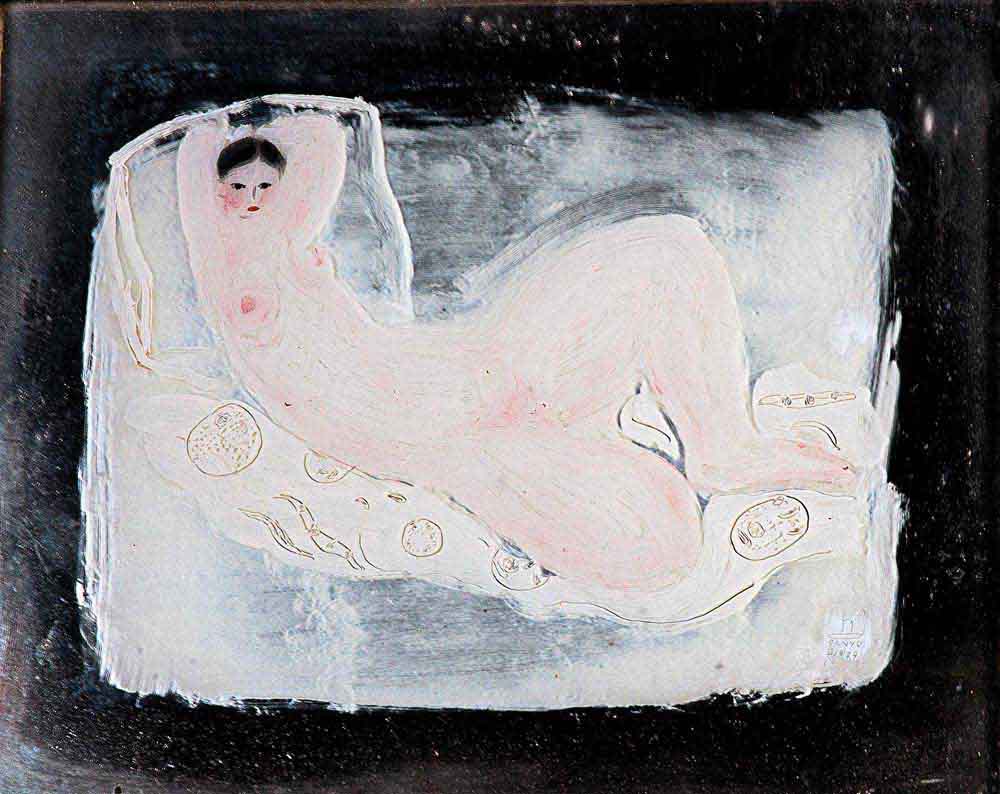
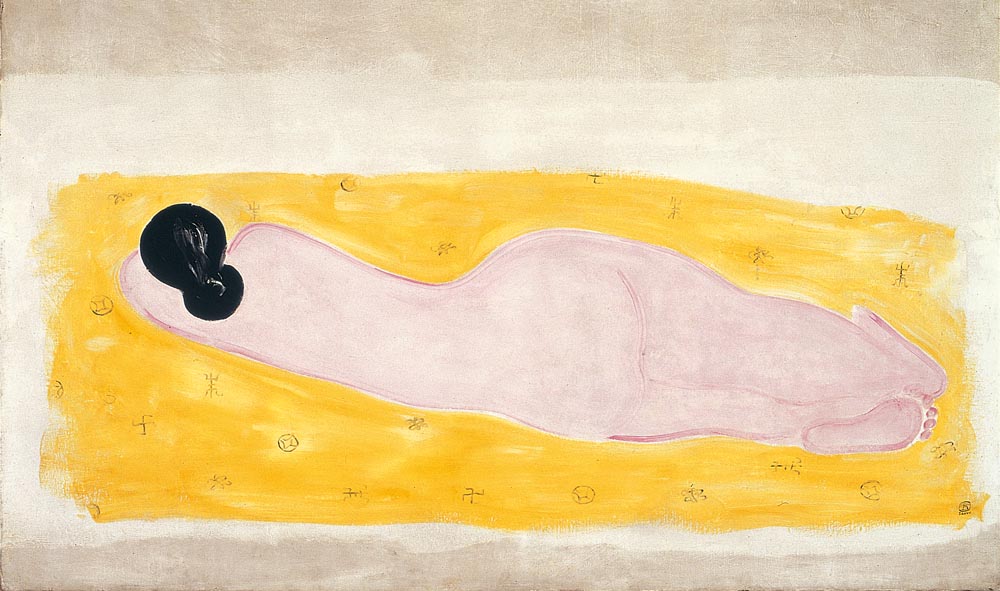
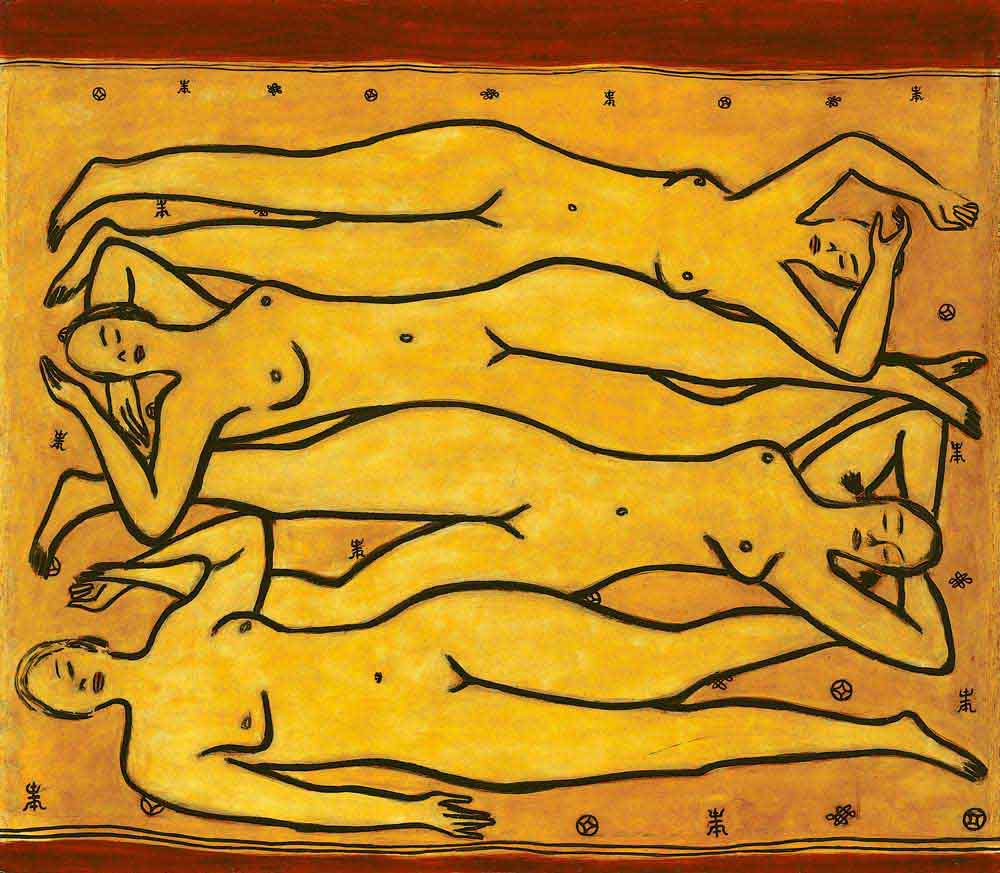
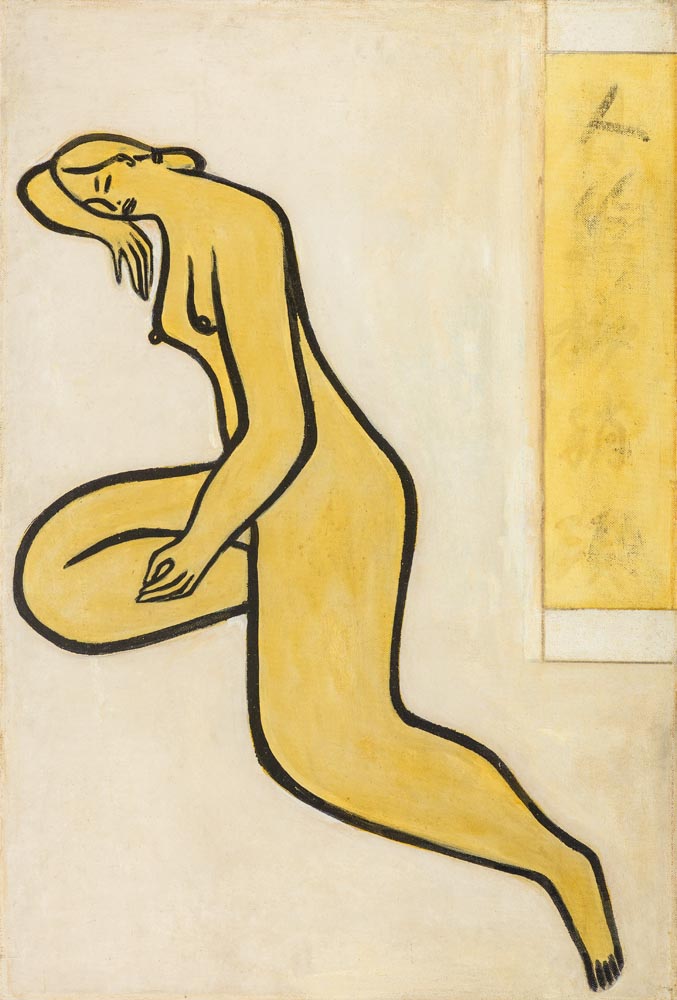
Sanyu spent roughly two years in Berlin with Chinese friends including Xu Beihong and Jiang Biwei, then returned to Paris in 1923. Instead of entering the official Ecole des Beaux-Arts, he worked at the less formal Academie de la Grande Chaumiere. There, life models and open studio sessions offered a subject largely unavailable in his earlier education. More than two thousand figure drawings survive from his Paris years. Many were made with Chinese brush and ink, sometimes on cafe placemats, and reduce the body to a few elastic strokes. Montparnasse also gave Sanyu a social world of cafes, artists, writers, and models. He met Marcelle Charlotte Guyot de la Hardrouyere at the academy; they married in the mid-1920s, but financial strain and personal conflict eventually ended the marriage.1929-1938
Roche, oil painting, salons, and sudden precarity
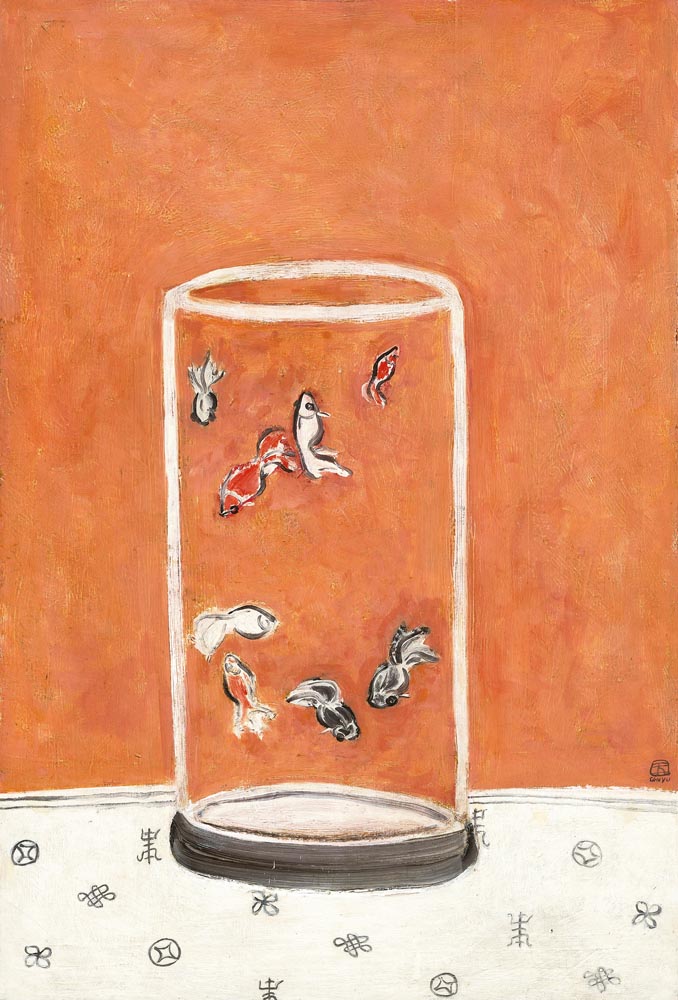
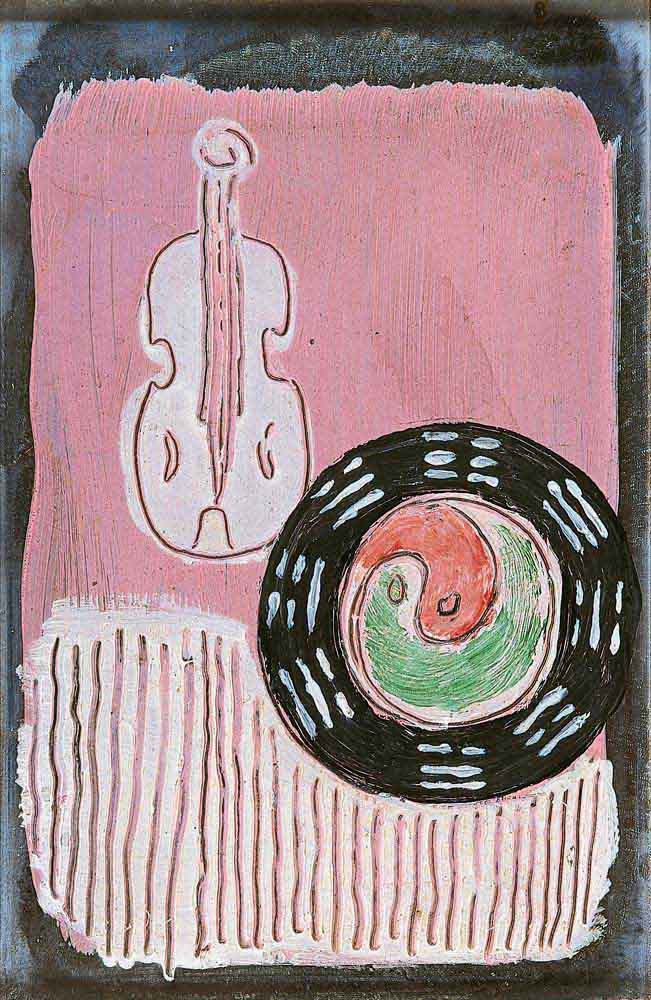
In 1929 Sanyu met the writer, collector, and dealer Henri-Pierre Roche, who encouraged him to move from drawing and printmaking into oil. Roche acquired 111 paintings and roughly 600 drawings, and Sanyu began showing oils at Paris salons. His first dated oil is from 1929. The new medium did not erase the logic of calligraphy: he scratched through paint, used broad flat grounds, and let contour carry the image. Stability was brief. The global depression weakened the market; Junmin died in 1931, ending family support; Roche broke off their arrangement; and Marcelle left. Dutch composer Johan Franco became a patron and organized exhibitions in the Netherlands, but sales remained limited. Chinese peers still recognized Sanyu as an important modernist, inviting him into discussions around the Storm Society and including his work in a 1933 exhibition at the Jeu de Paume.1938-1950
War, material scarcity, ping-tennis, and Robert Frank
The late 1930s and the occupation of France intensified Sanyu's poverty. At times he lacked money for canvas and paint, making small plaster sculptures and pursuing an invented sport he called ping-tennis. The project was not a comic sideline to him; he hoped its success might provide the recognition and income painting had not. Sanyu continued to exhibit in salons and publish short texts, but remained marginal to the commercial system around the School of Paris. In 1948 he traveled to New York to promote ping-tennis and met the young photographer Robert Frank. They became roommates and close friends. Frank organized a 1950 exhibition, but no paintings sold. When Sanyu returned to Paris, he left a group of works with Frank, establishing one of the most consequential archives of his postwar painting.1950-1966
Late painting, solitude, and the exhibition that never happened
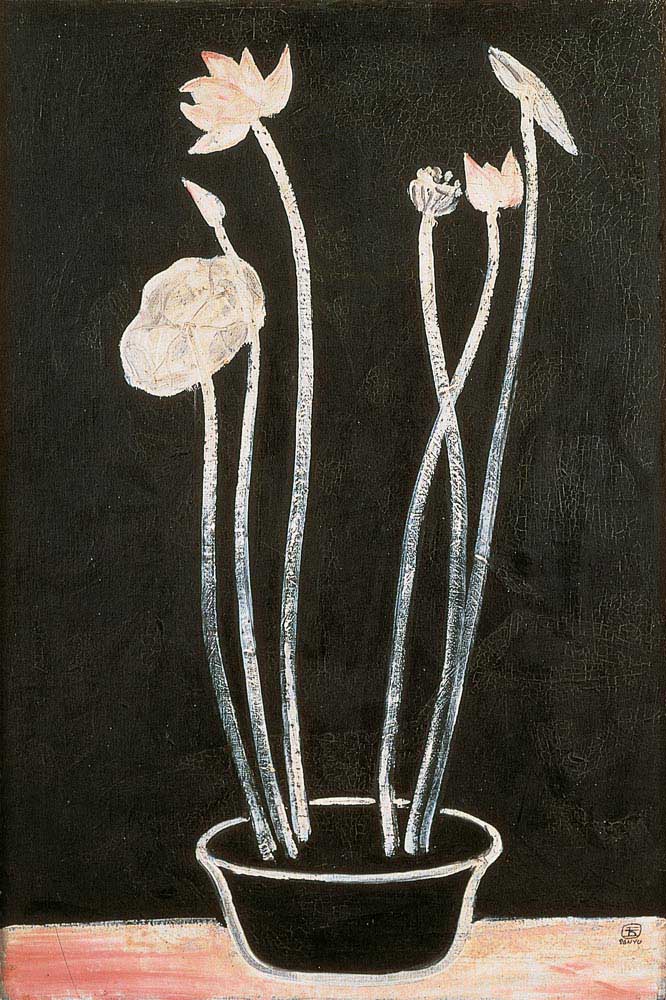
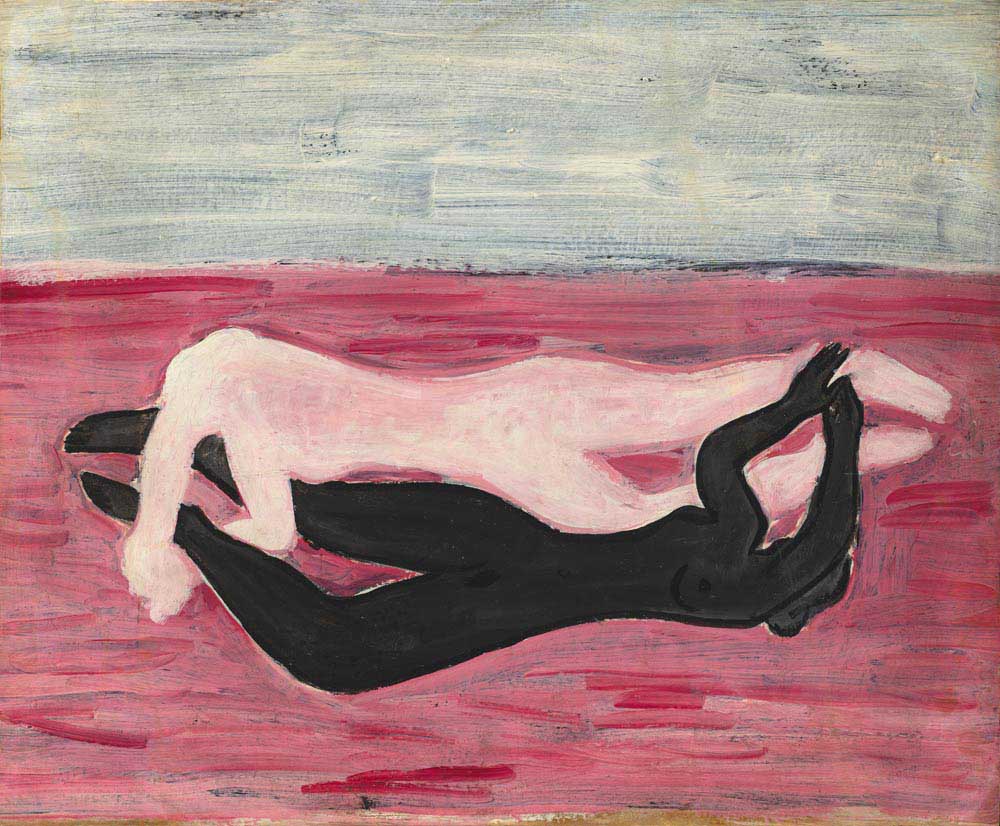
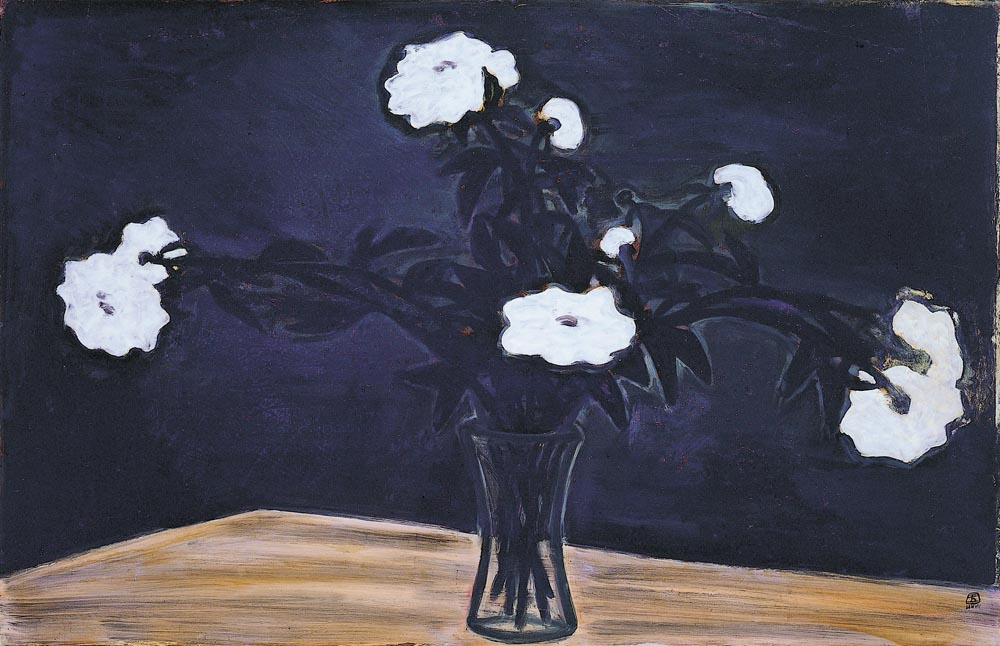
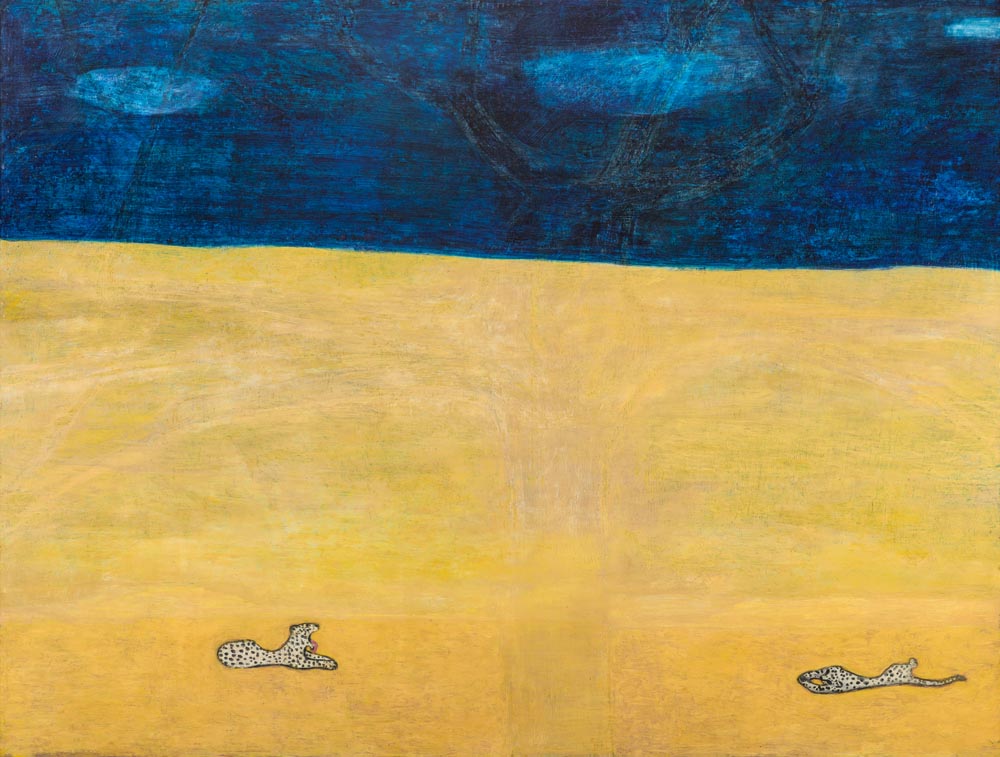
Back in Paris, Sanyu survived through odd jobs including furniture painting and carpentry. Postwar attention was shifting toward abstraction, yet he remained committed to nudes, flowers, fish, and animals. Those familiar subjects changed sharply. Grounds grew darker or more exposed; figures became monumental outlines; animals appeared isolated in landscapes larger than any plausible habitat. Friends including Robert Frank and Alberto Giacometti remained important, but Sanyu was increasingly withdrawn. In 1963 Taiwan's education minister Huang Jilu invited him to teach and hold a solo exhibition. Sanyu sent more than forty paintings to Taipei, but travel and exhibition plans failed. In August 1966 he died from accidental gas asphyxiation in his Paris studio, reportedly found in bed with a book open beside him.After 1966