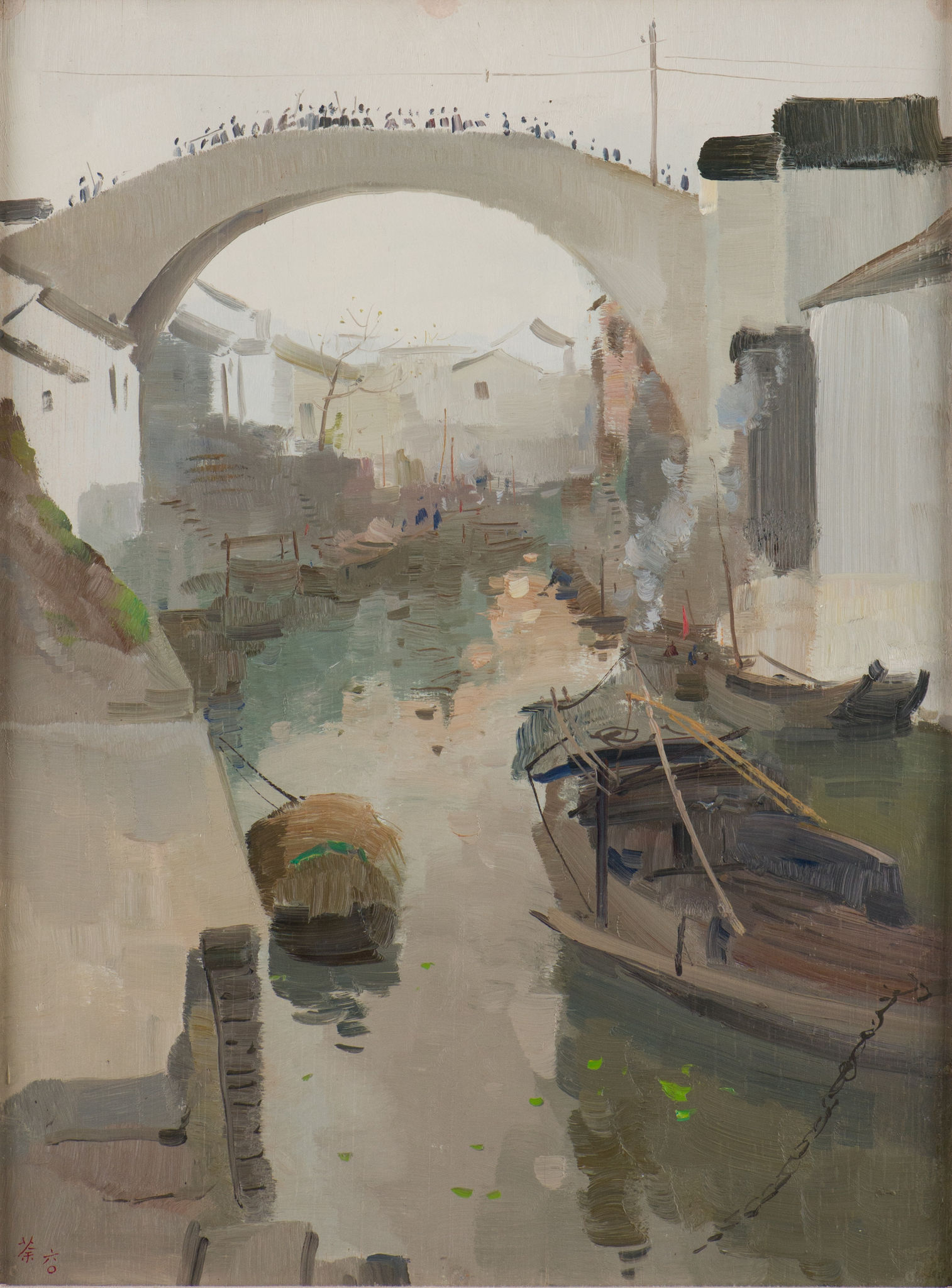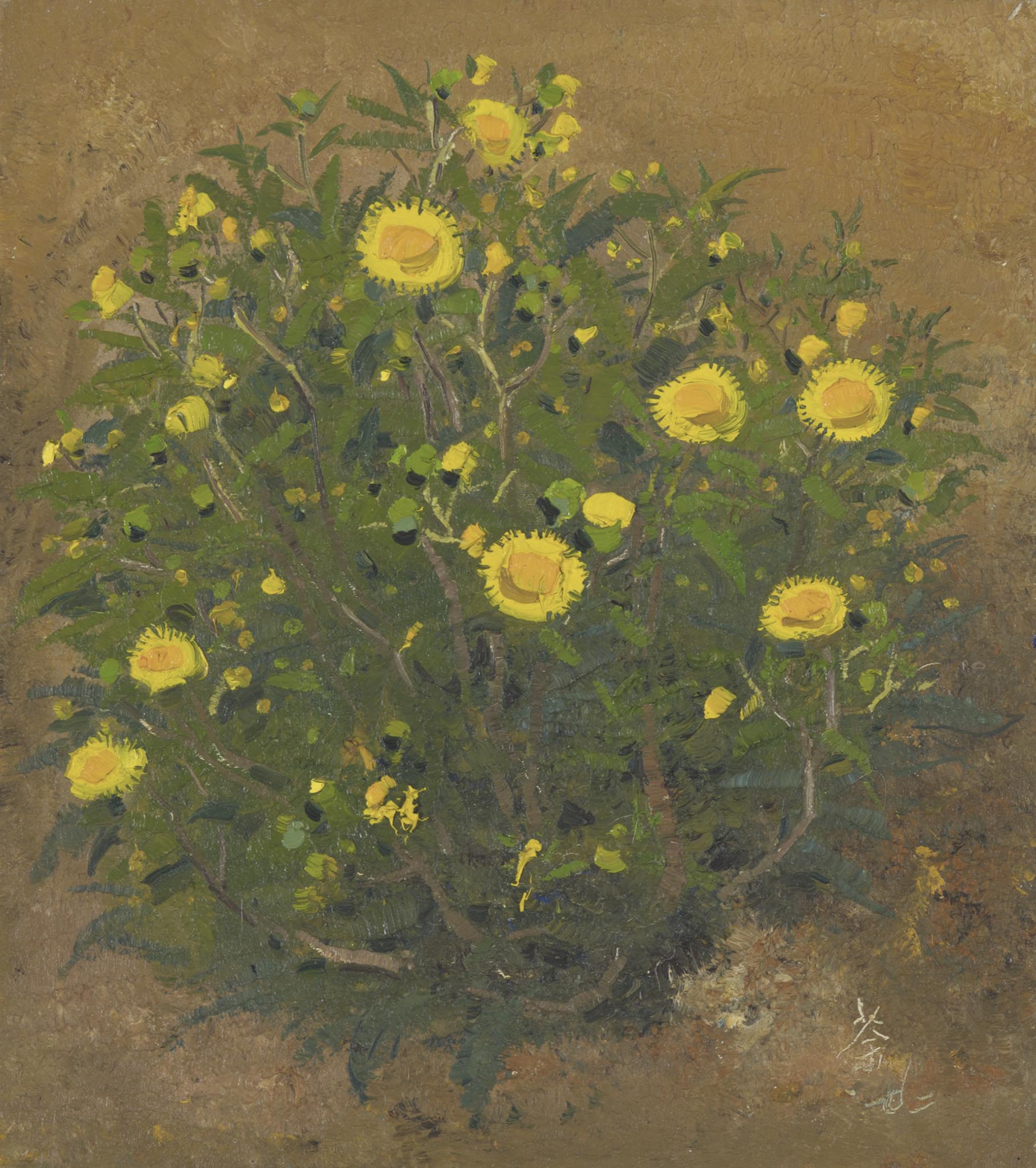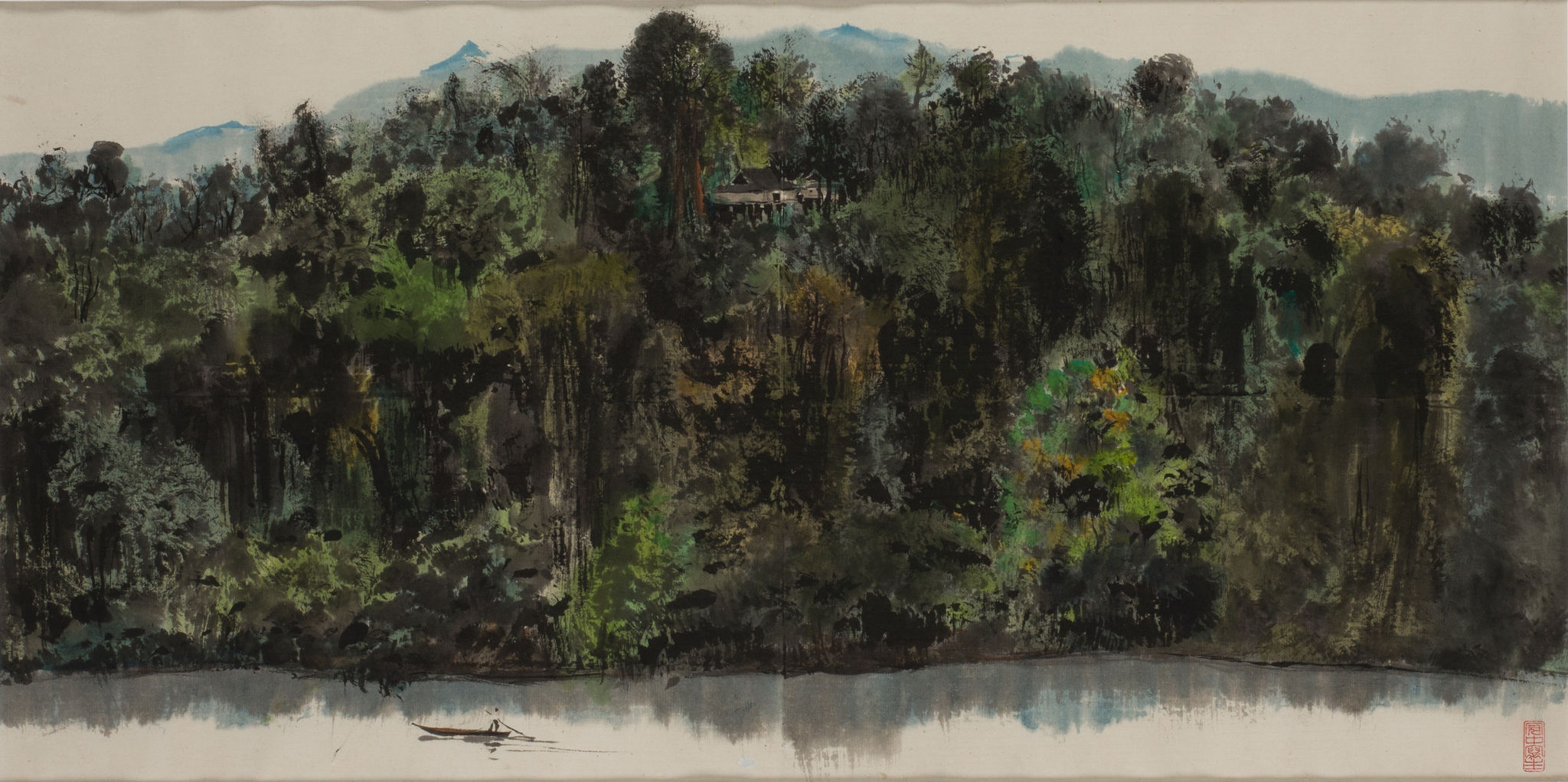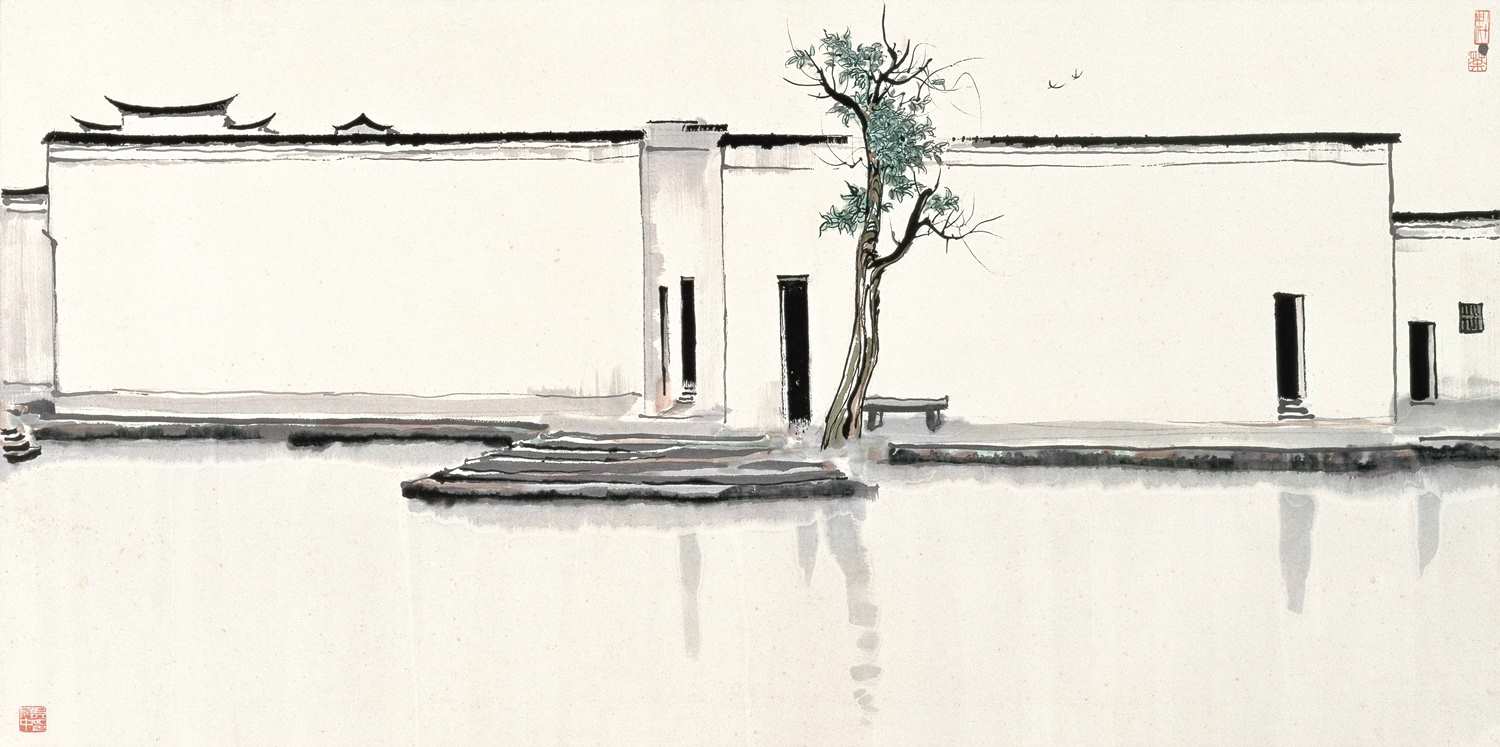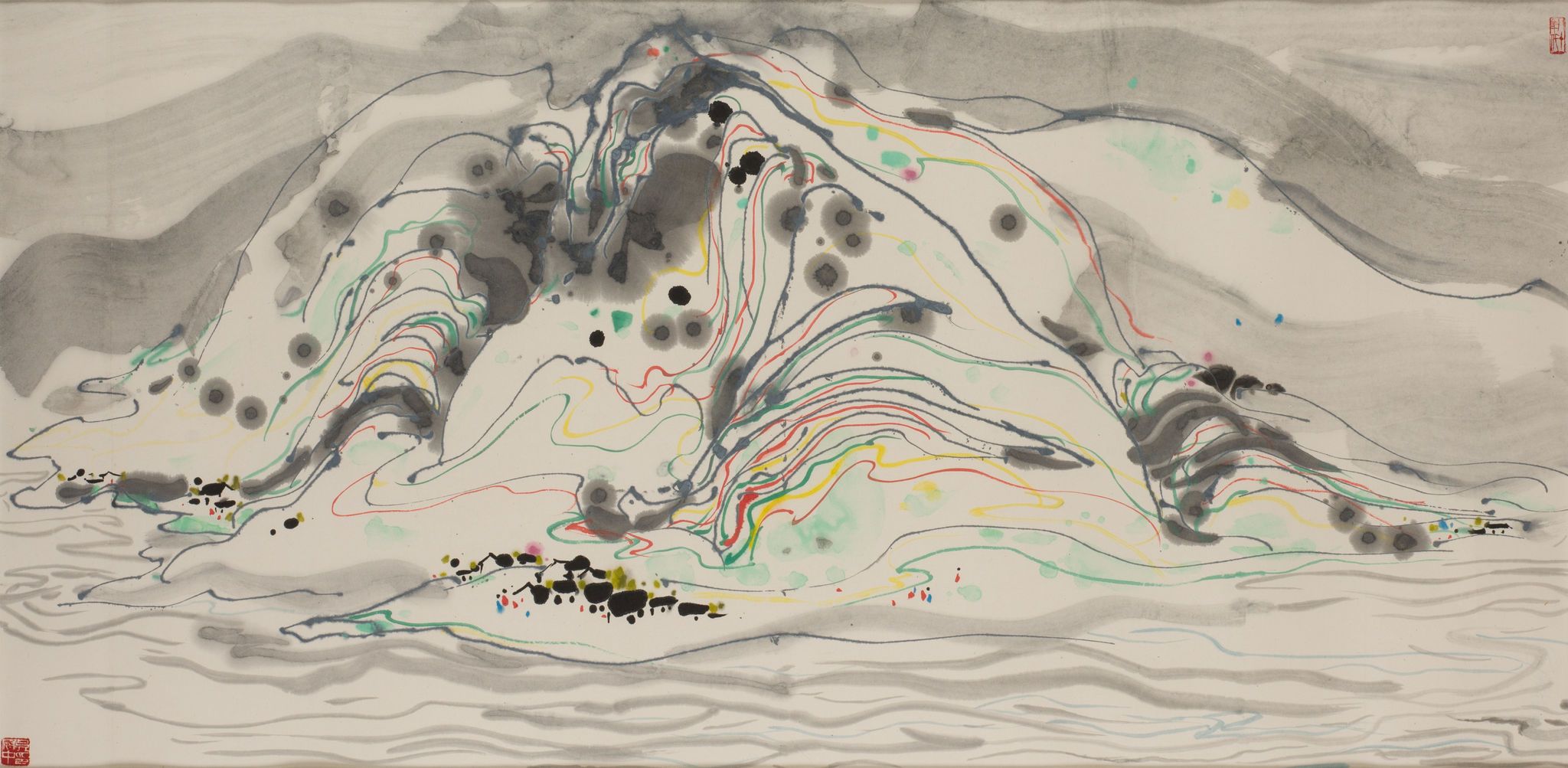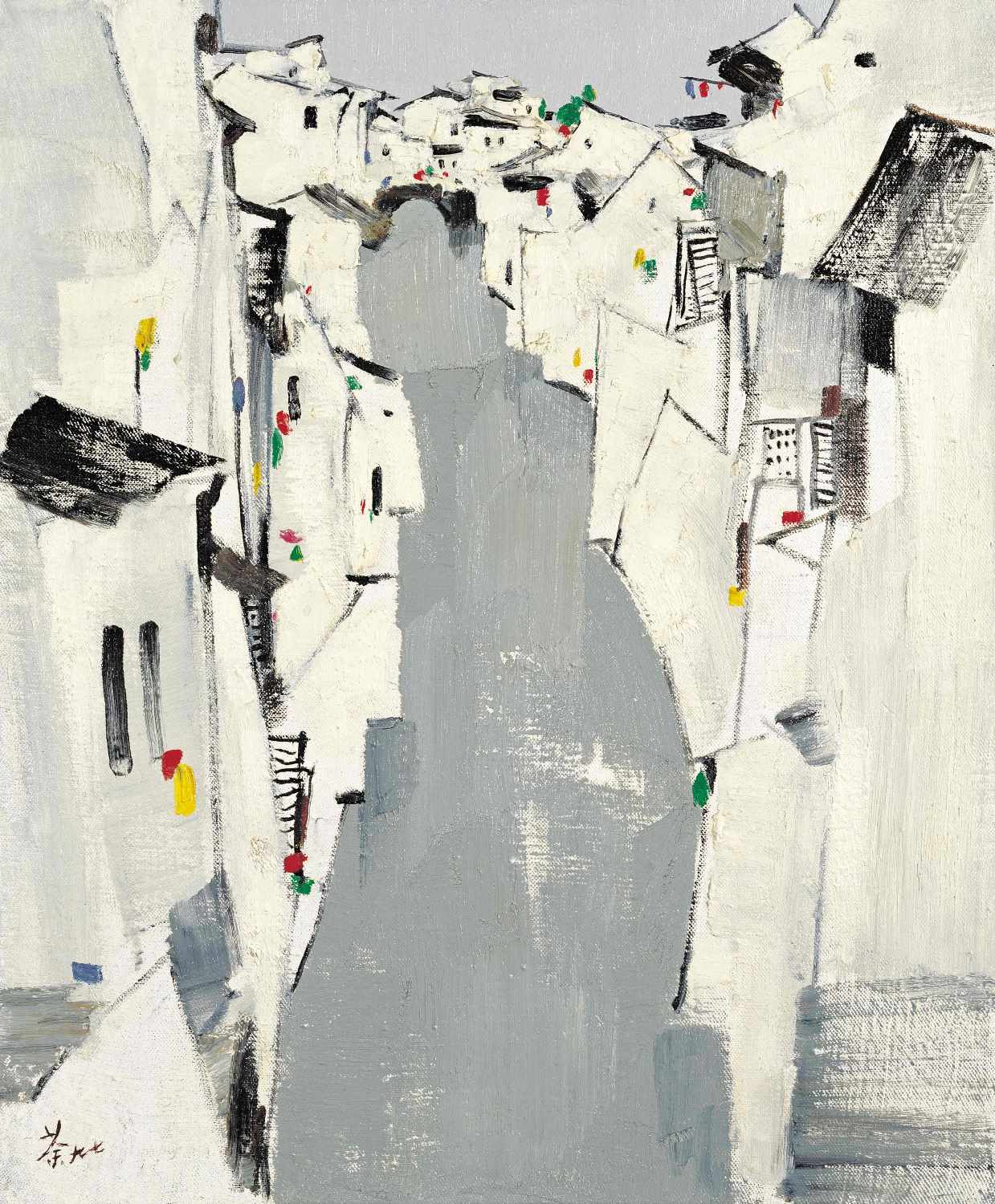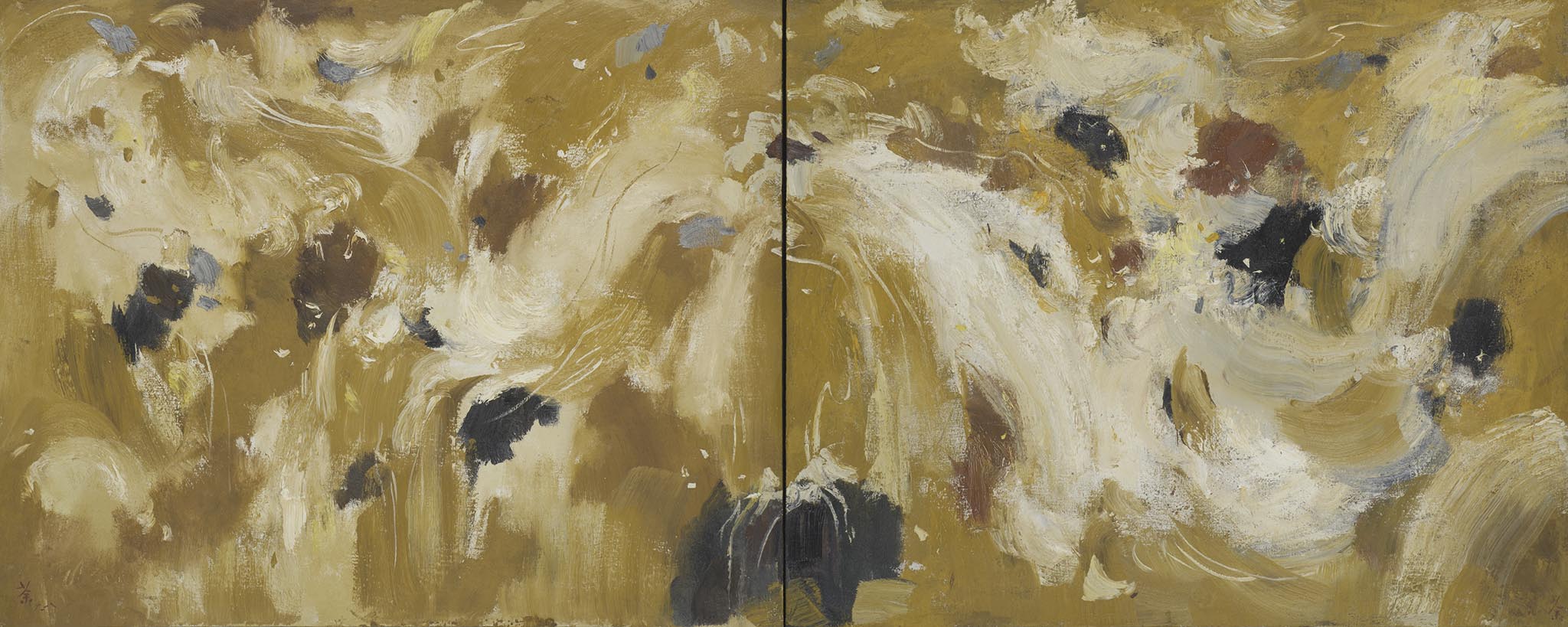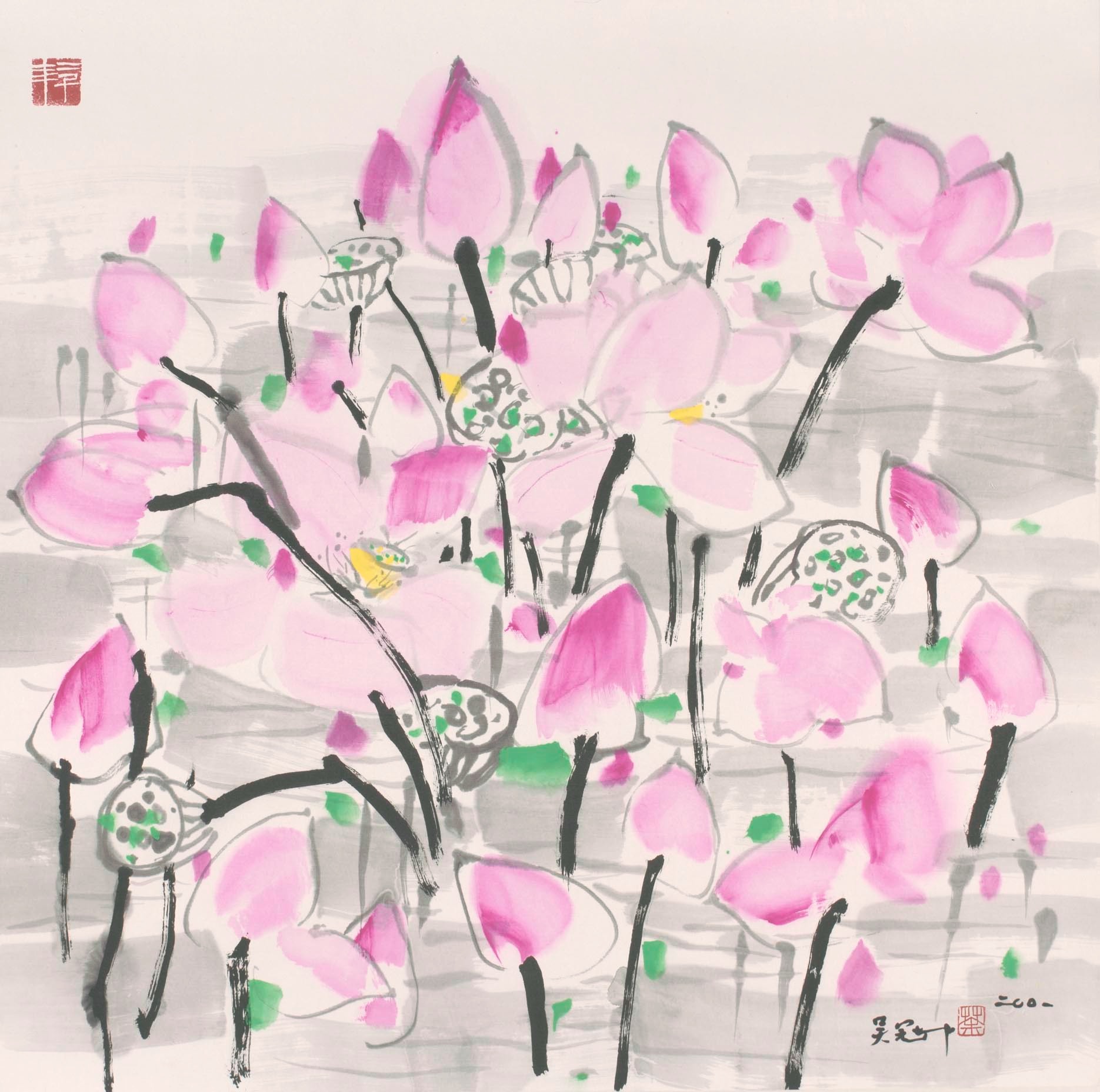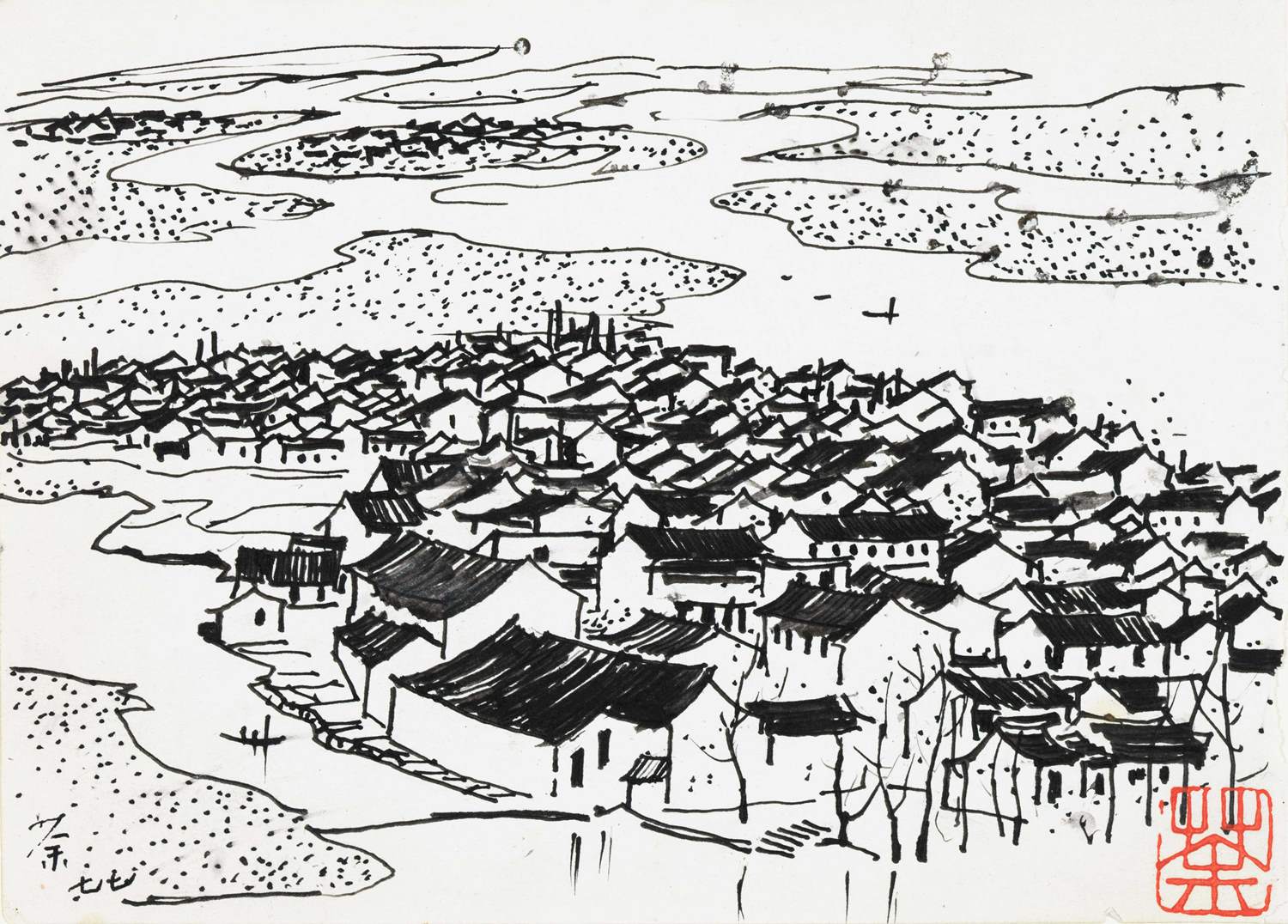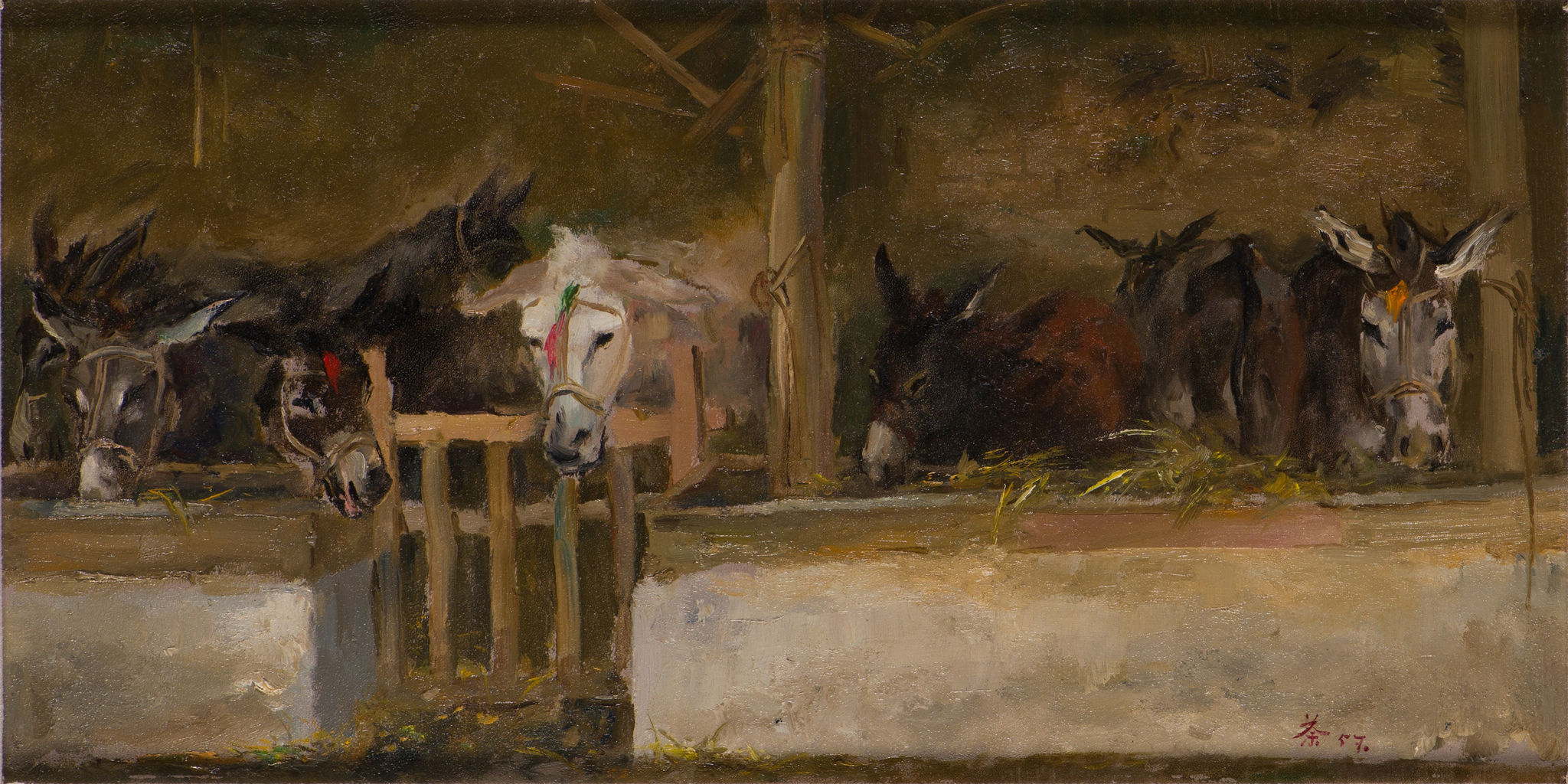
Wu's landscapes stayed tied to a place even when line, dot, and plane pushed them close to abstraction.
1919-1936
Yixing, engineering, and a decisive transfer to art
Wu Guanzhong was born on August 29, 1919, in Yixing, Jiangsu, into a rural schoolteacher's family. His early education did not point directly toward an artistic career. In 1935 he entered the Zhejiang Industrial School to study electrical engineering, a practical path in a country urgently pursuing technical modernization. A meeting with fellow student Chu Teh-Chun changed that direction. After seeing the art program in Hangzhou, Wu transferred in 1936 to the National Academy of Art, an institution founded by the reformist artist and educator Cai Yuanpei and directed by Lin Fengmian. The academy was unusual for treating Chinese and European traditions as active, contemporary resources. Wu studied oil painting and drawing while also encountering ink painting through teachers including Pan Tianshou. That double education established the problem he would pursue for the rest of his life: how could different materials and histories meet without one becoming decoration for the other?1937-1947
An academy in flight and a scholarship to Paris
The Second Sino-Japanese War began a year after Wu entered the academy. Hangzhou fell, and the school moved repeatedly through Jiangxi, Hunan, Yunnan, and Sichuan. Students carried their education across a landscape transformed by invasion, displacement, and scarcity. Wu graduated in 1942 and taught during the remaining war years. The experience made travel and direct observation inseparable from artistic formation: landscape was not a stable national symbol but terrain crossed under pressure. In 1946 Wu ranked first in a government competition for overseas study, and he reached Paris the following year. The scholarship placed him within a longer Republican project of sending artists abroad to acquire knowledge that could be used in China. It also reunited him with debates already present at Hangzhou, where modern art had never been understood as exclusively European or exclusively Chinese.1947-1950
Paris modernism and the choice to return
In Paris, Wu studied at the Ecole nationale superieure des Beaux-Arts in the studio of Jean Souverbie. Museums mattered as much as formal instruction. He studied Cezanne's construction, Van Gogh's charged color, Utrillo's streets, and the experiments of Gauguin, Matisse, Braque, and Picasso. European modernism confirmed that likeness could be reorganized through color, structure, and personal sensation. Wu also saw Chinese objects and painting differently from abroad, beginning the reciprocal process that later shaped his teaching. In 1950, while Zao Wou-Ki remained in Paris and built an expatriate career, Wu chose to return through Hong Kong to the newly founded People's Republic of China. He believed his work belonged with the people and landscapes that had formed him. That decision defined both the possibilities and the severe constraints of his subsequent career.1950-1978
Teaching, fieldwork, prohibition, and the dung basket easel
Wu taught at the Central Academy of Fine Arts, Tsinghua University, Beijing Fine Arts College, and the Central Academy of Arts and Crafts. His interest in formal structure and post-Impressionist color often conflicted with the Soviet-style socialist realism favored by state institutions. Landscape fieldwork became a practical way to keep painting from observation while searching for a national language in oil. During the Cultural Revolution, beginning in 1966, Wu was forbidden to teach, paint, or write; in 1970 he was sent to rural Hebei for hard labor. When limited painting became possible, he worked on small boards outdoors and famously used a manure basket as an easel. Recalled in 1973 for a public decoration project, he joined a major Yangtze River sketching journey in 1974. Political rehabilitation and a solo exhibition in 1978 reopened public life after more than a decade of suppression.1978-1992
Formal beauty, the turn to ink, and a public argument
The reform era gave Wu room to exhibit, travel, teach, and publish essays that had circulated only privately or not at all. He argued for the formal beauty of line, color, rhythm, and composition at a time when such priorities were still criticized as detached from social content. His goal was not formalism for its own sake. He wanted to 'localize oil painting' and 'modernize Chinese painting' by testing both media against direct experience. From the mid-1970s onward, ink became increasingly central. Oil taught him mass and color; ink offered speed, interval, and the structural force of black and white. Wu's famous image of an abstract kite tied to life by an unbroken string summarized the balance: a picture could approach abstraction, but it should retain a felt connection to observed reality. In 1992 he became the first living Chinese artist given a solo exhibition by the British Museum.1992-2010 and after