01 / Why this work matters
Oil and ink arrive at the same water's edge
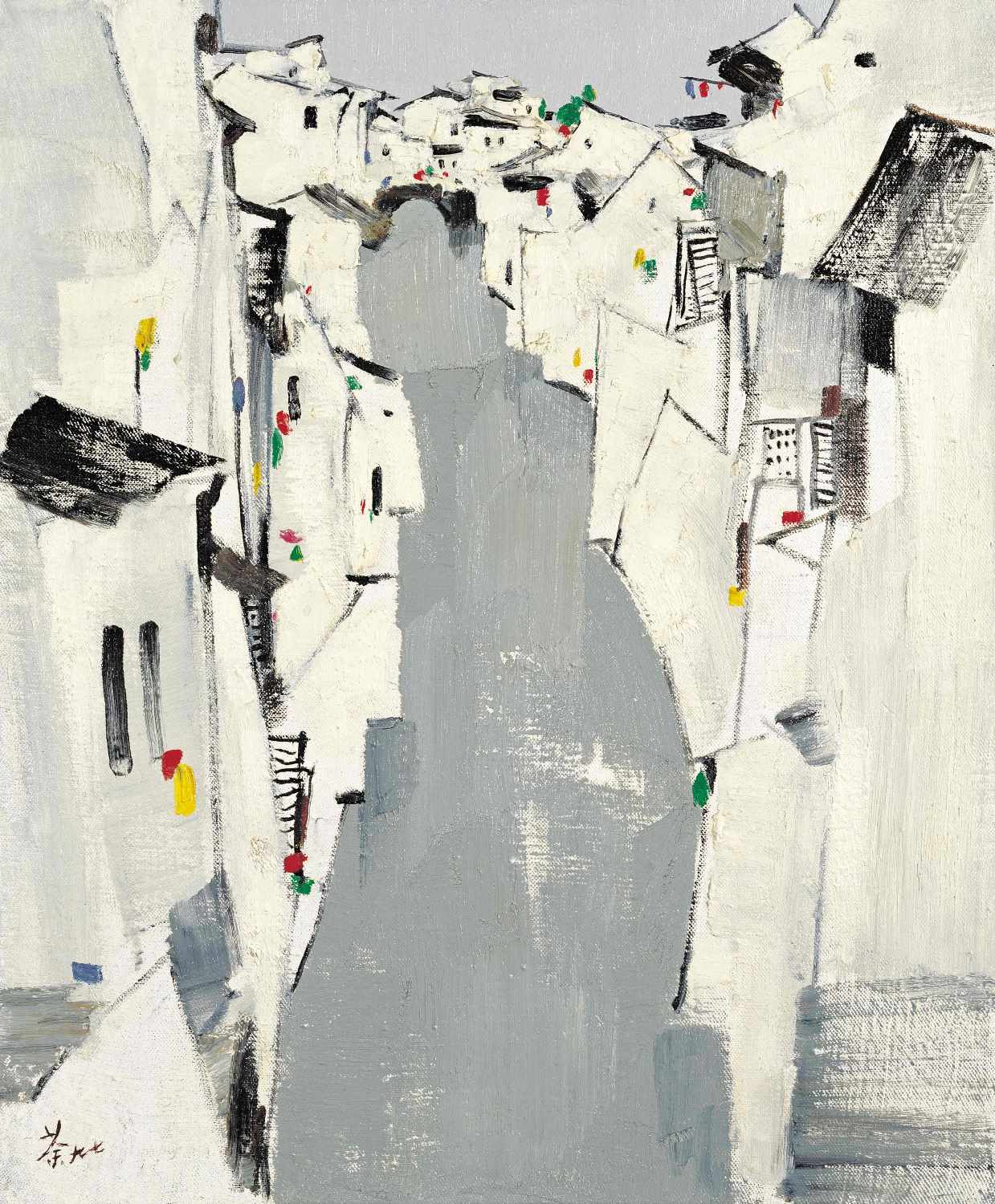
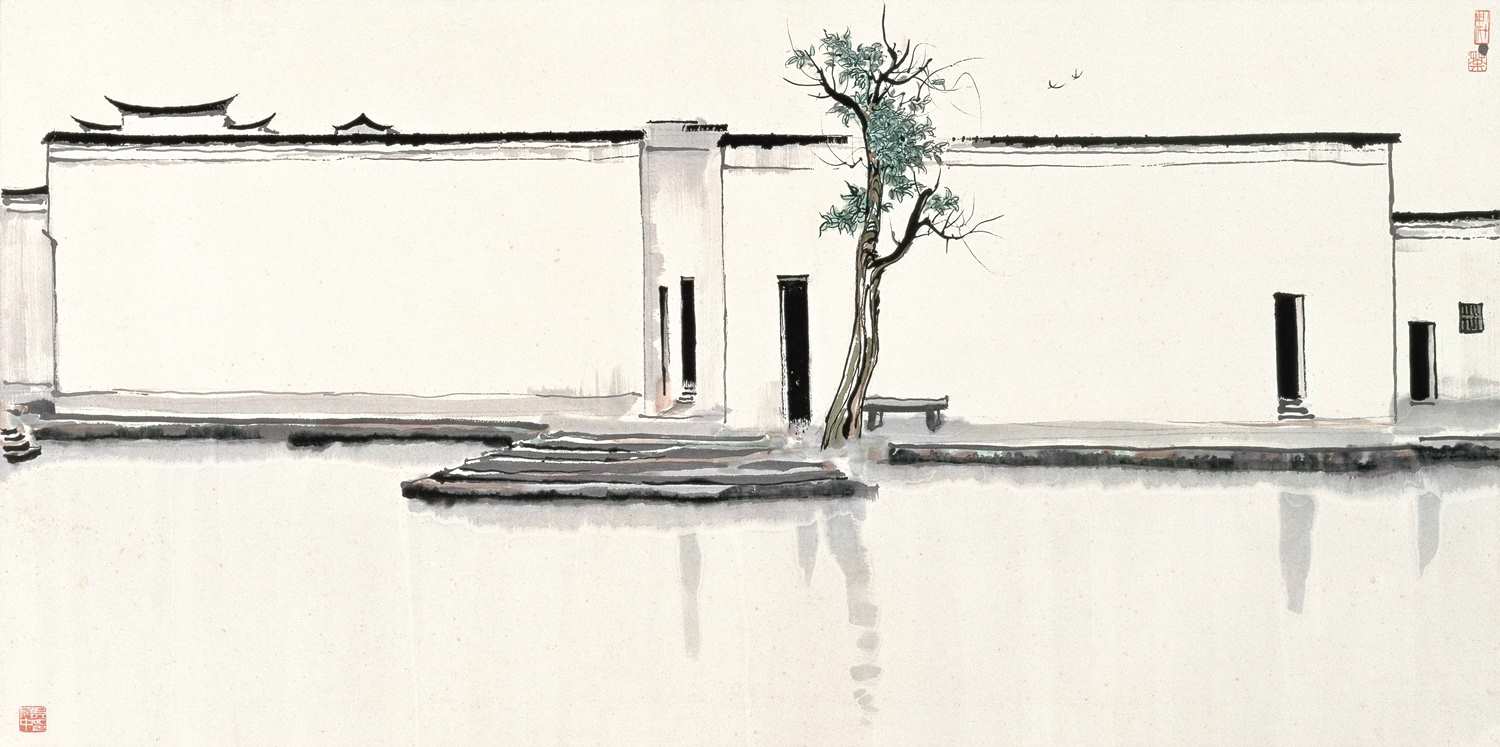
A row of white houses sits above water that nearly doubles the composition. Dark roofs and windows form a spare upper register; below, their reflections loosen into wavering blue, black, and grey strokes. The motif recalls Wu's earlier hometown paintings, but decades of ink practice have changed how the oil moves.
Solid architecture and unstable reflection let Wu test two visual truths at once. The houses require measured geometry, while water asks for discontinuity. Rather than imitate ink, oil absorbs its habits of interval, speed, and unpainted breathing room. The result is neither a return to youth nor a late stylistic synthesis, but a mature conversation between materials.
03 / History and object record
Place the image inside a life, a period, and a documented record.
Historical interpretation
Wu Guanzhong, 1997
Solid architecture and unstable reflection let Wu test two visual truths at once. The houses require measured geometry, while water asks for discontinuity. Rather than imitate ink, oil absorbs its habits of interval, speed, and unpainted breathing room. The result is neither a return to youth nor a late stylistic synthesis, but a mature conversation between materials.
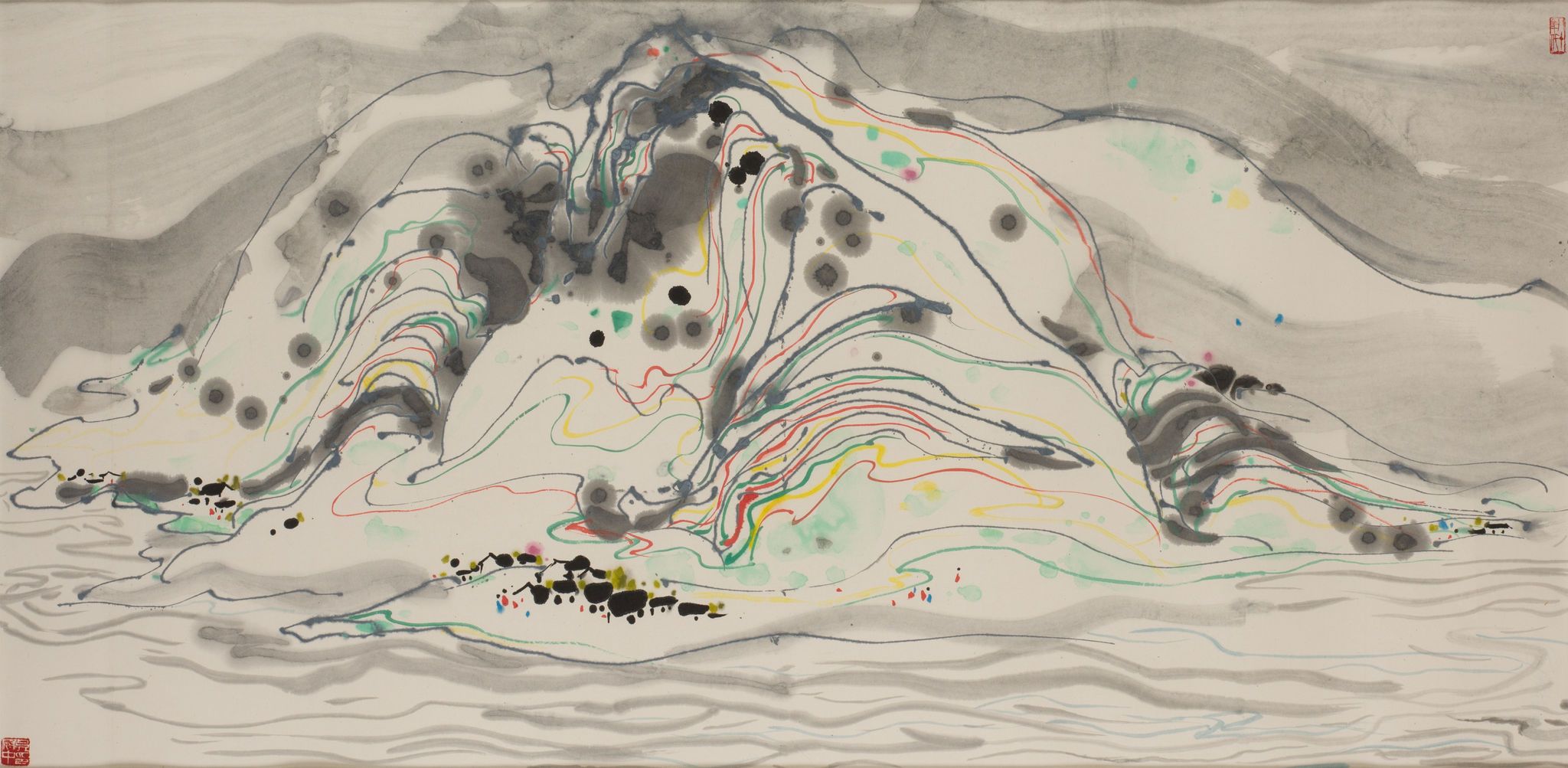
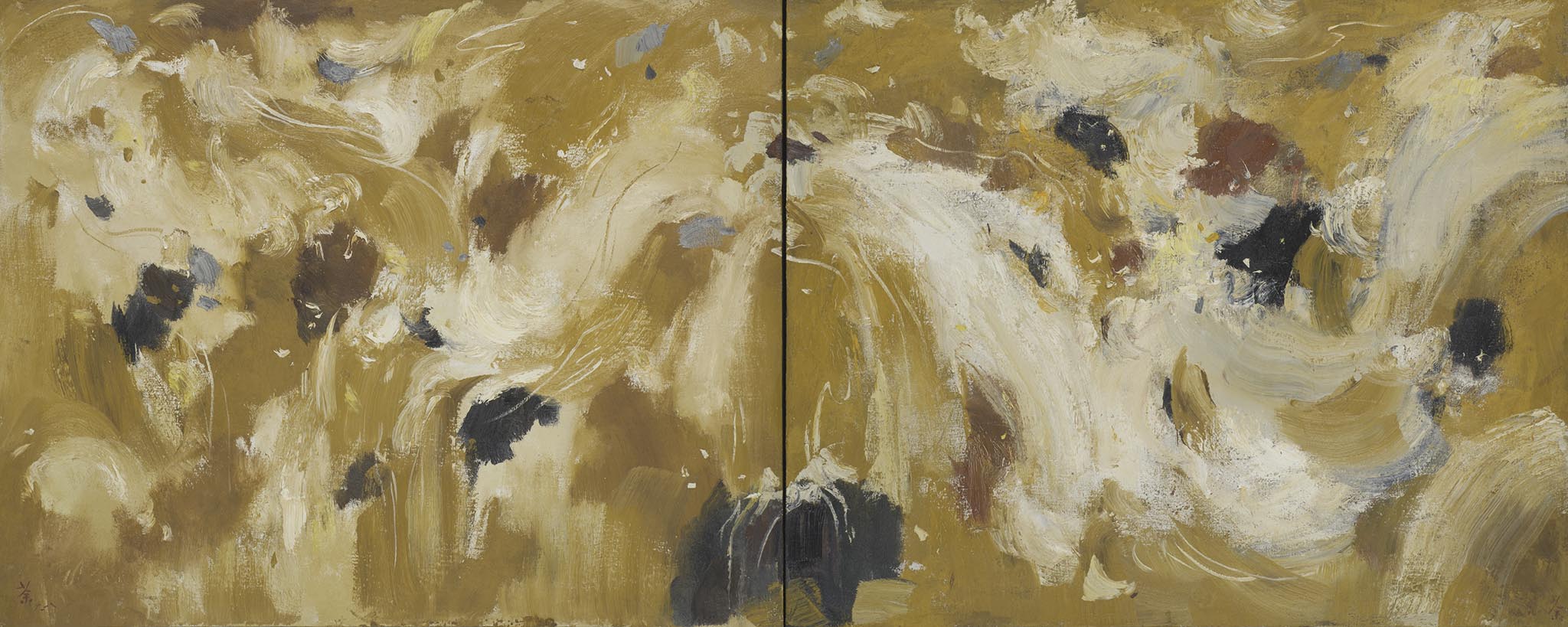
Oil and ink test how observed landscape can approach abstraction without cutting its tie to life.
Exhibition and record history
What the cited record establishes
- Recorded collection
- Hong Kong Museum of Art
- Catalogue reference
- FA2002.0012
- Exhibition chronology
- The cited public record does not provide a complete exhibition chronology. Follow the primary record for provenance, display history, and future updates.