Modern Chinese ArtistsObject Study 03

Wu Guanzhong / 吴冠中

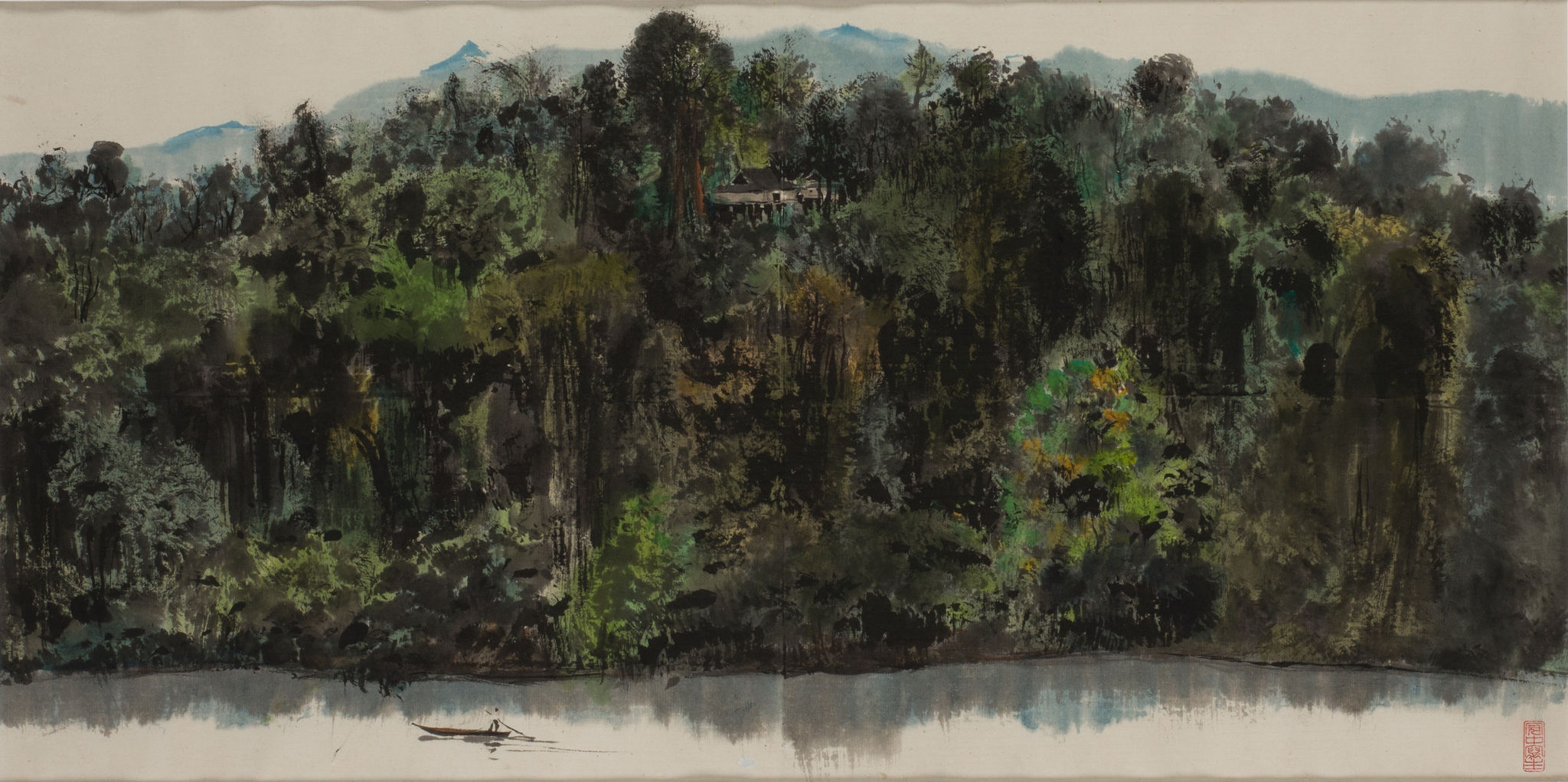
The Riverside Jungle

1978

Ink becomes dense, modern, and bodily

The Riverside Jungle by Wu Guanzhong, an ink and colour landscape of dense dark trees beside pale water
Image reference: National Gallery Singapore collection. Educational presentation.
The Riverside Jungle100%
The Riverside Jungle by Wu Guanzhong, an ink and colour landscape of dense dark trees beside pale water

Use the controls or mouse wheel to zoom. Drag the image when enlarged.

Enter the artwork study
04

Object in the Wu Guanzhong study

Date
1978
Medium
Chinese ink and colour on paper
Dimensions
52 x 103 cm
Collection / record
National Gallery Singapore
Catalogue / accession
2008-06864

01 / Why this work matters

Ink becomes dense, modern, and bodily

A dark stand of trees presses across the paper while a pale river opens below. Wu does not use ink to recover an antique landscape convention. He lets branches knot, overlap, and thicken into a nearly abstract mass whose weight is balanced by the unpainted water.

The work dates from the year of Wu's political rehabilitation and a renewed period of exhibition. Its energy comes from friction between legibility and autonomy: trunks still belong to trees, but their black lines also behave as independent forces. Small color accents keep the thicket alive and prevent monochrome structure from closing in on itself.
02 / Formal analysis

Five ways to read the visible evidence.

Move from color and composition toward the material surface and the space the work asks you to inhabit.
01

Color and light

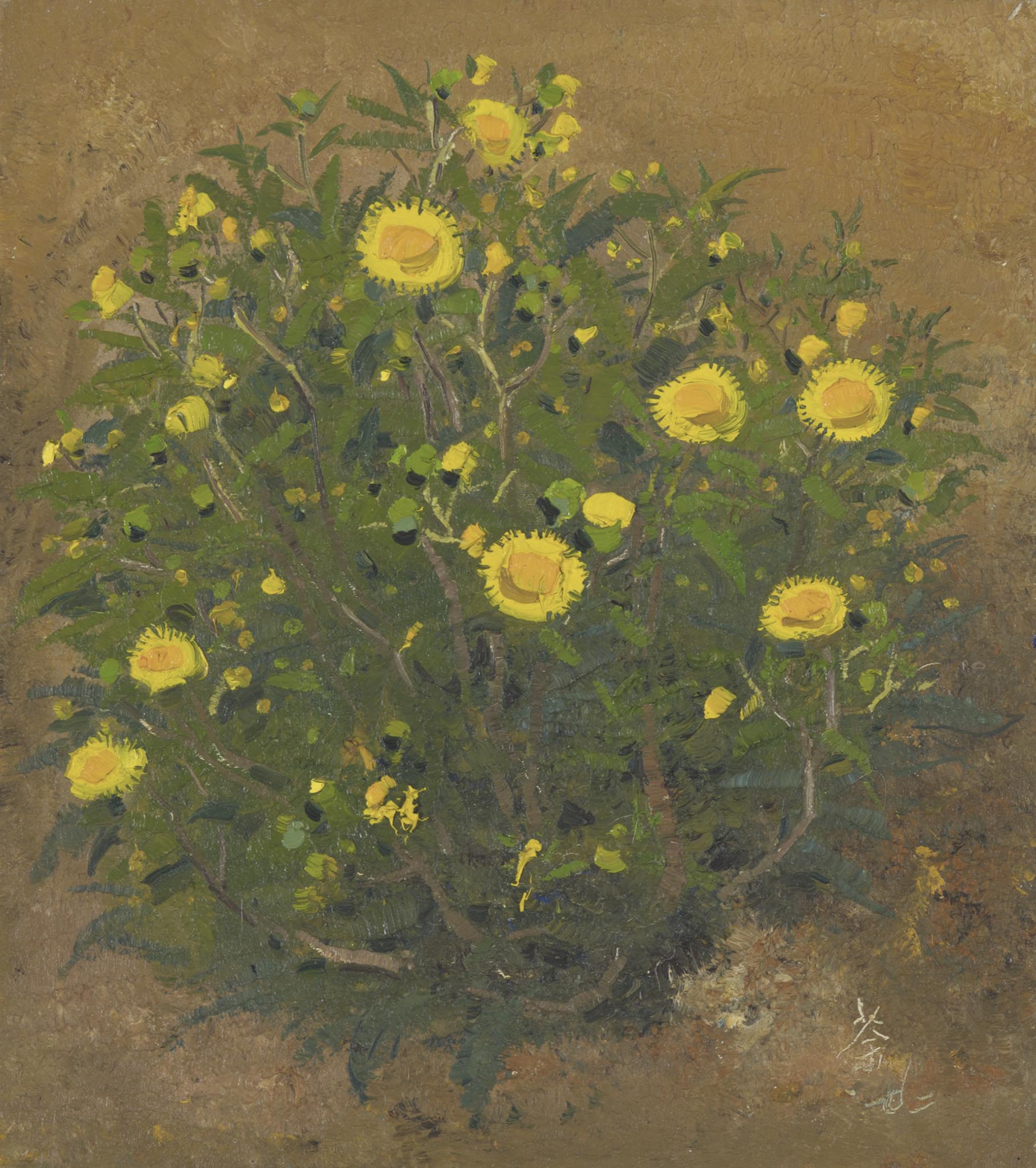
A compressed canopy that almost becomes one black shape

02

Composition and rhythm

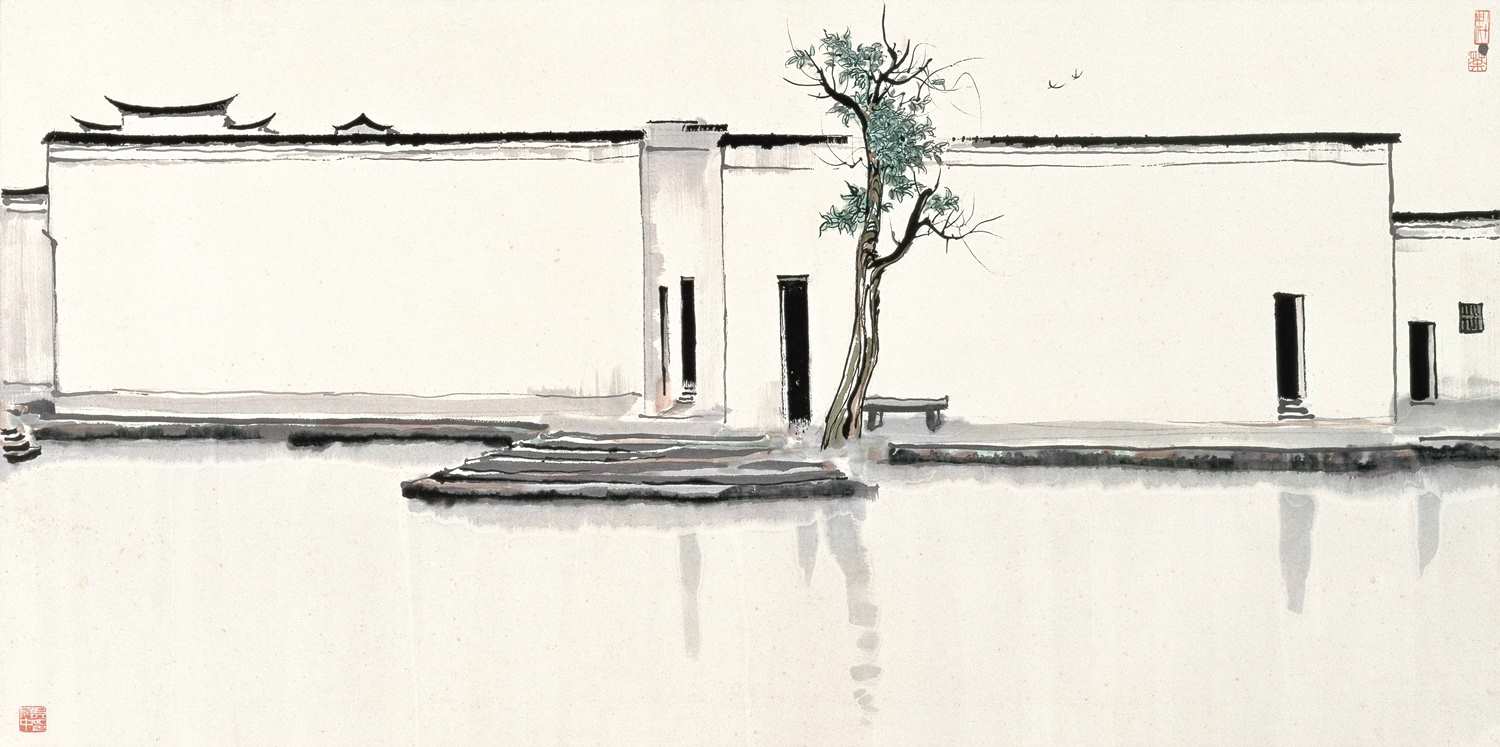
Untouched paper making the river feel bright without white pigment

03

Line and gesture

Fine branches escaping the heavier architecture of the trunks

04

Surface and material

The work dates from the year of Wu's political rehabilitation and a renewed period of exhibition. Its energy comes from friction between legibility and autonomy: trunks still belong to trees, but their black lines also behave as independent forces. Small color accents keep the thicket alive and prevent monochrome structure from closing in on itself.
05

Space and scale

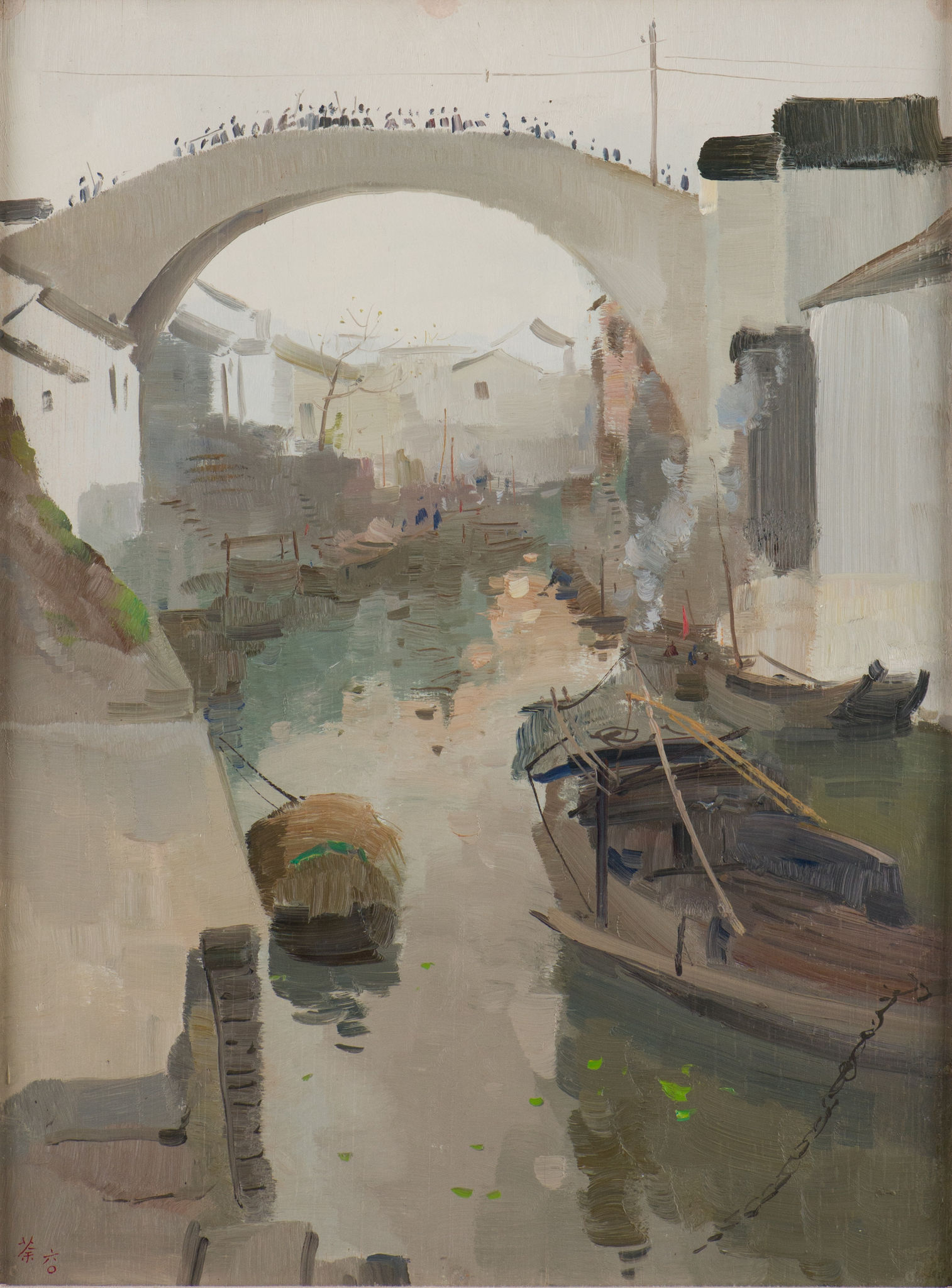
A dark stand of trees presses across the paper while a pale river opens below. Wu does not use ink to recover an antique landscape convention. He lets branches knot, overlap, and thicken into a nearly abstract mass whose weight is balanced by the unpainted water.

03 / History and object record

Place the image inside a life, a period, and a documented record.

Historical interpretation

Wu Guanzhong, 1978

The work dates from the year of Wu's political rehabilitation and a renewed period of exhibition. Its energy comes from friction between legibility and autonomy: trunks still belong to trees, but their black lines also behave as independent forces. Small color accents keep the thicket alive and prevent monochrome structure from closing in on itself.

Oil and ink test how observed landscape can approach abstraction without cutting its tie to life.

Exhibition and record history

What the cited record establishes

Recorded collection
National Gallery Singapore
Catalogue reference
2008-06864
Exhibition chronology
The cited public record does not provide a complete exhibition chronology. Follow the primary record for provenance, display history, and future updates.

04 / Connections

Continue through neighboring works and parallel modernisms.

05 / Sources and further reading

Follow the object back to its institutional record.