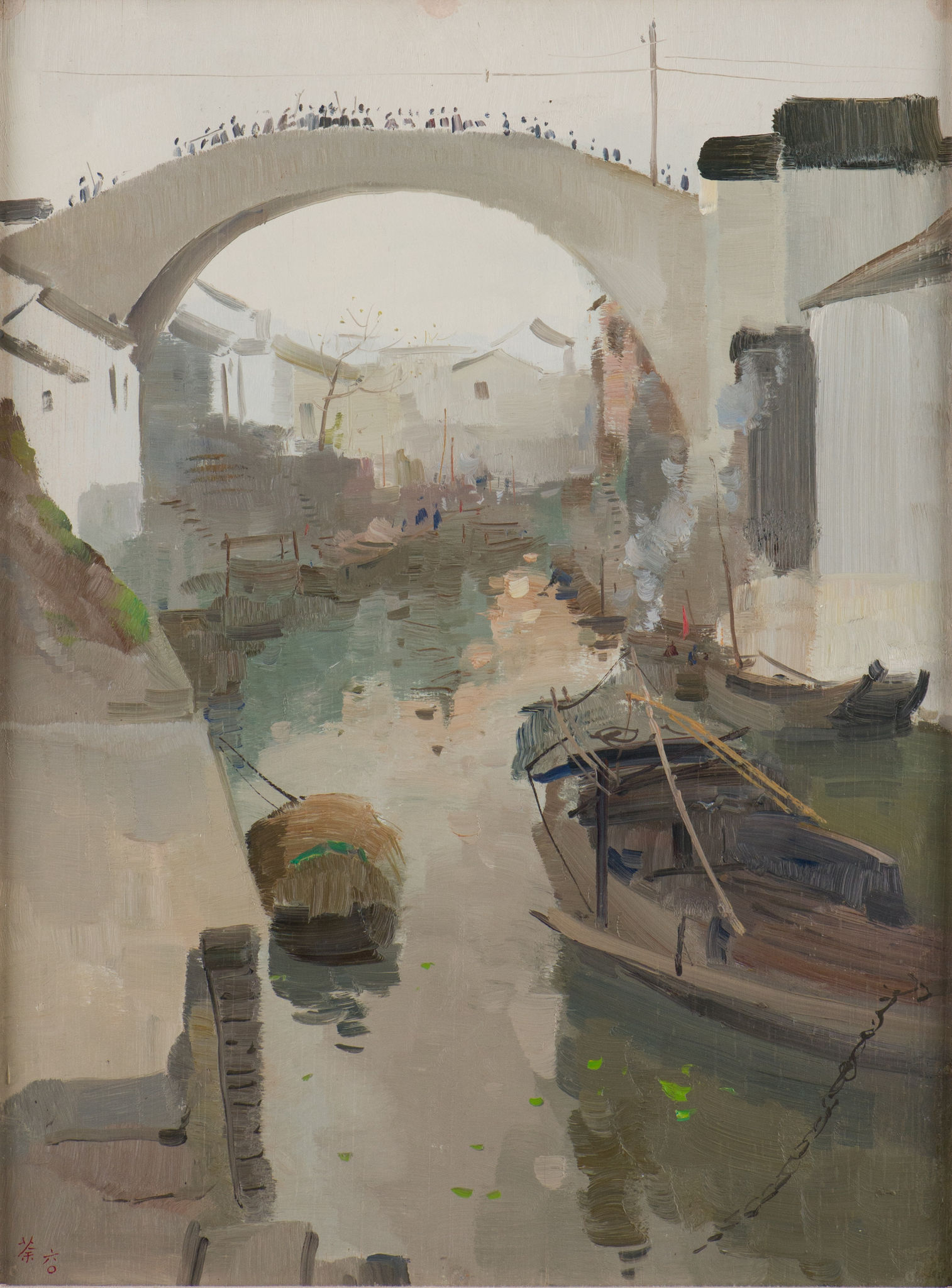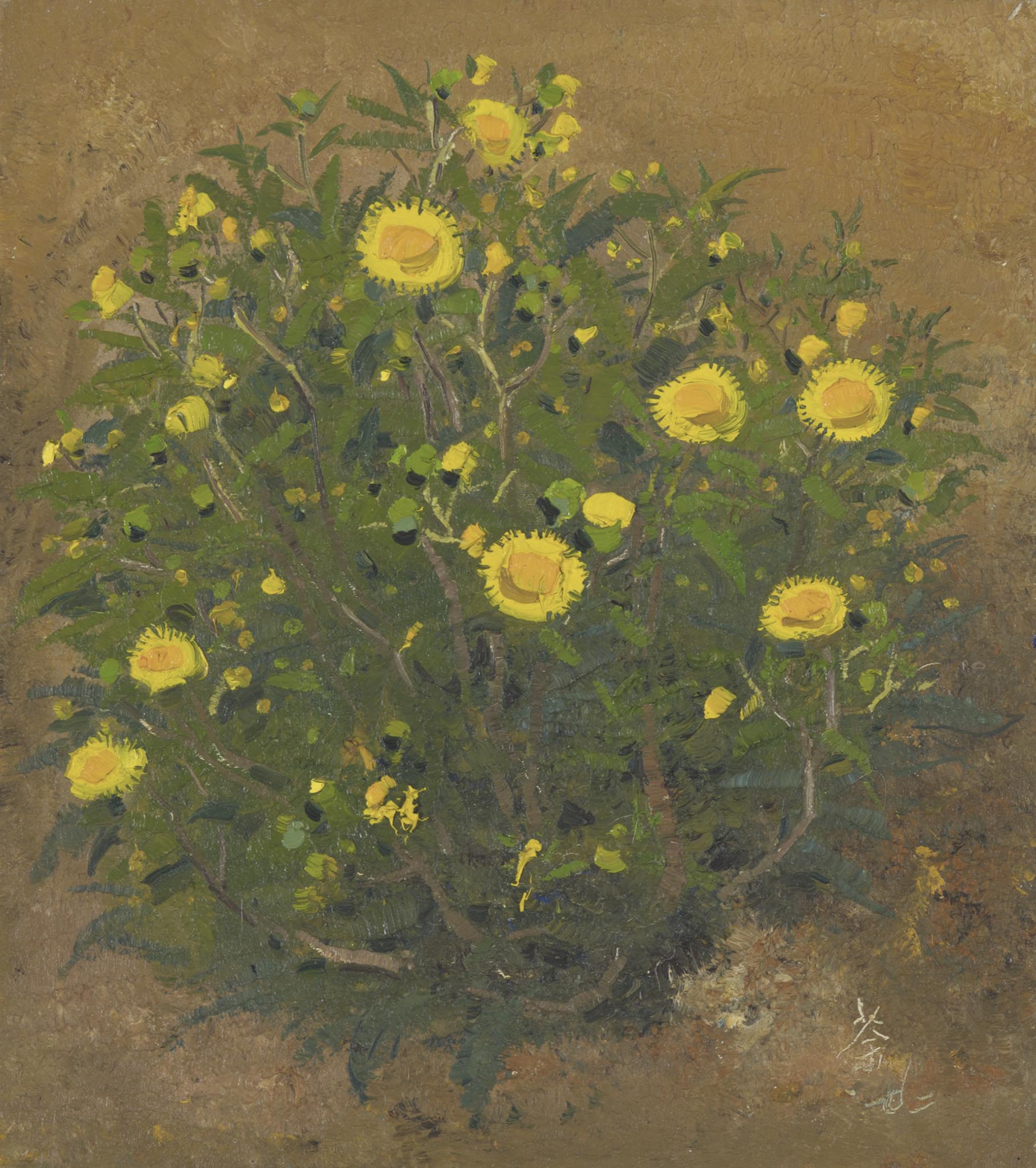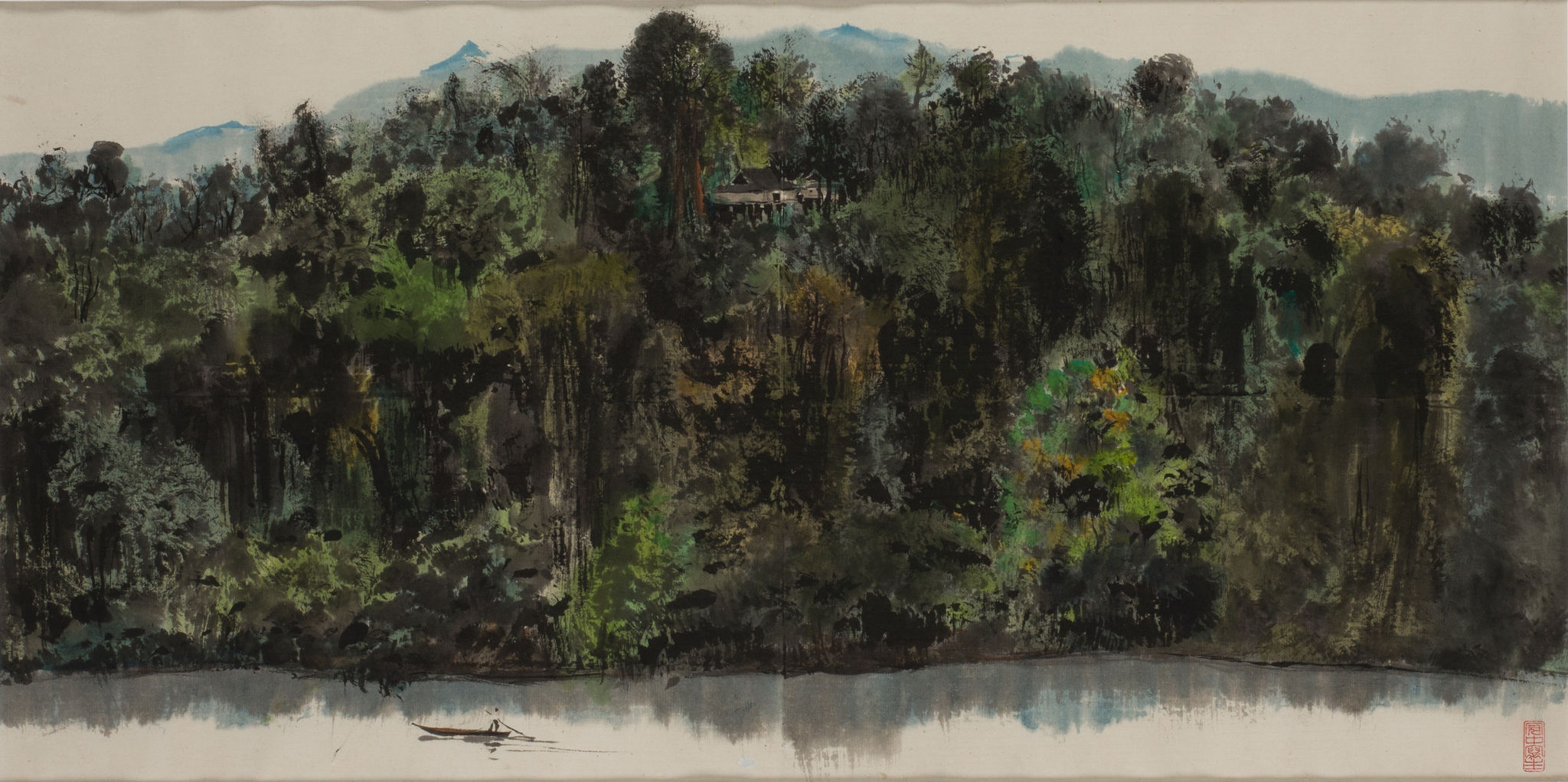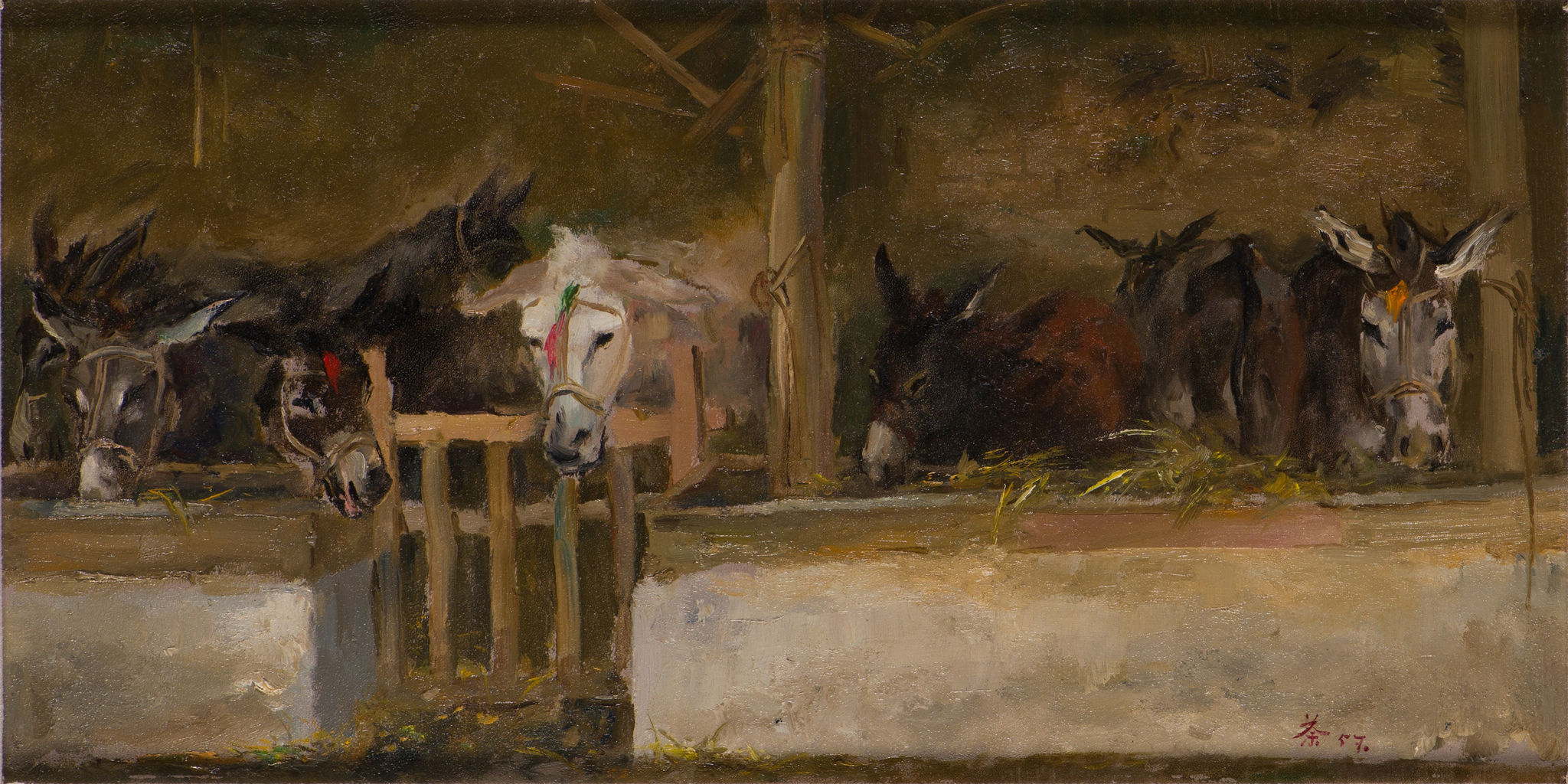
Painted seven years after Wu returned to China, Livestock belongs to a period when he was searching for a viable language inside the new People's Republic. The cattle and handlers remain recognizable, but the landscape is compressed into bands of pale earth, dark backs, and quick vertical accents. Description gives way to rhythm without abandoning the observed world.
The work already reveals Wu's lifelong refusal to separate formal structure from lived place. Its horizontal board behaves almost like a handscroll, while the broken oil brushwork records the weight and movement of animals. European plein-air painting, Chinese compositional memory, and the practical demands of field sketching meet on one modest surface.