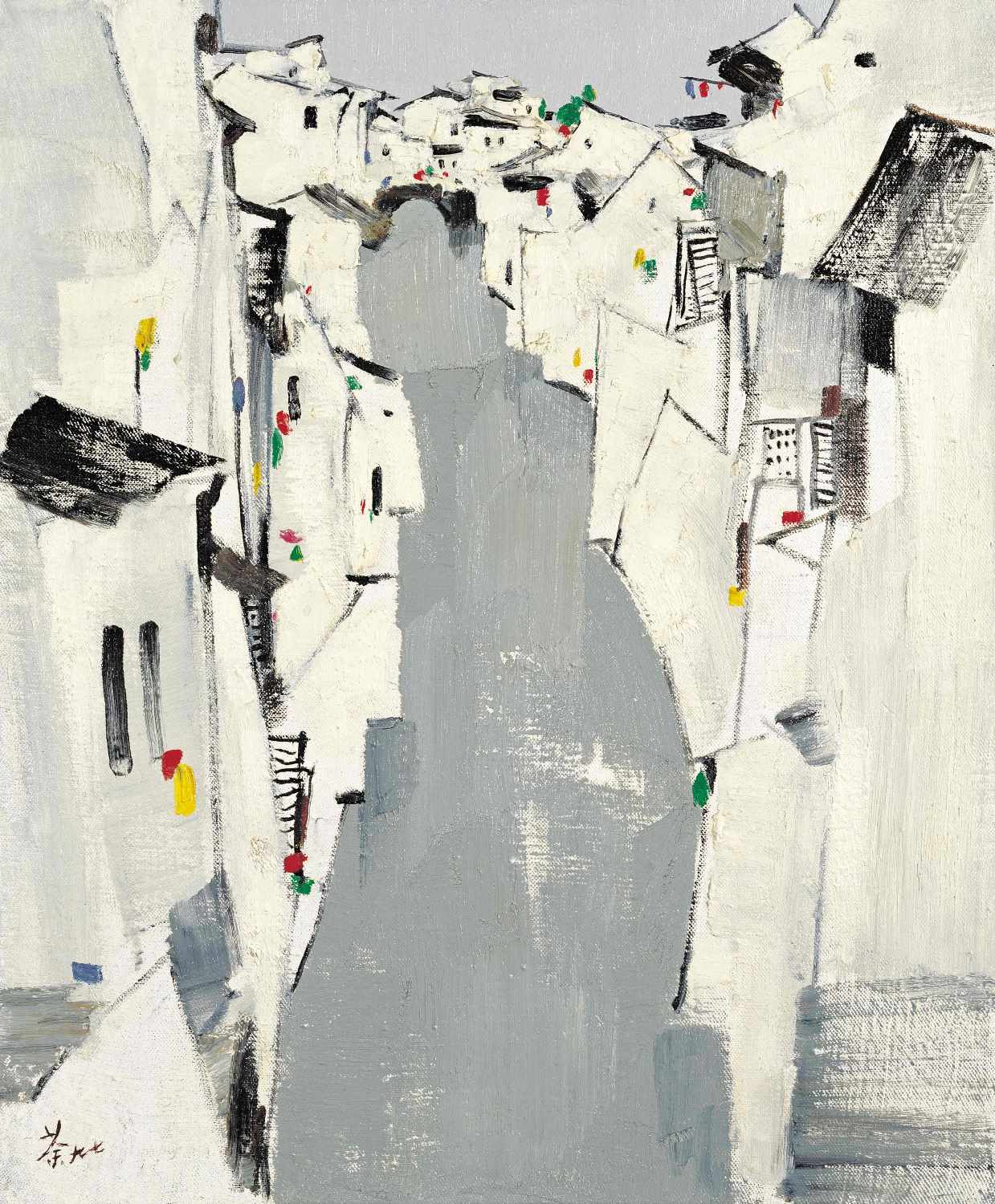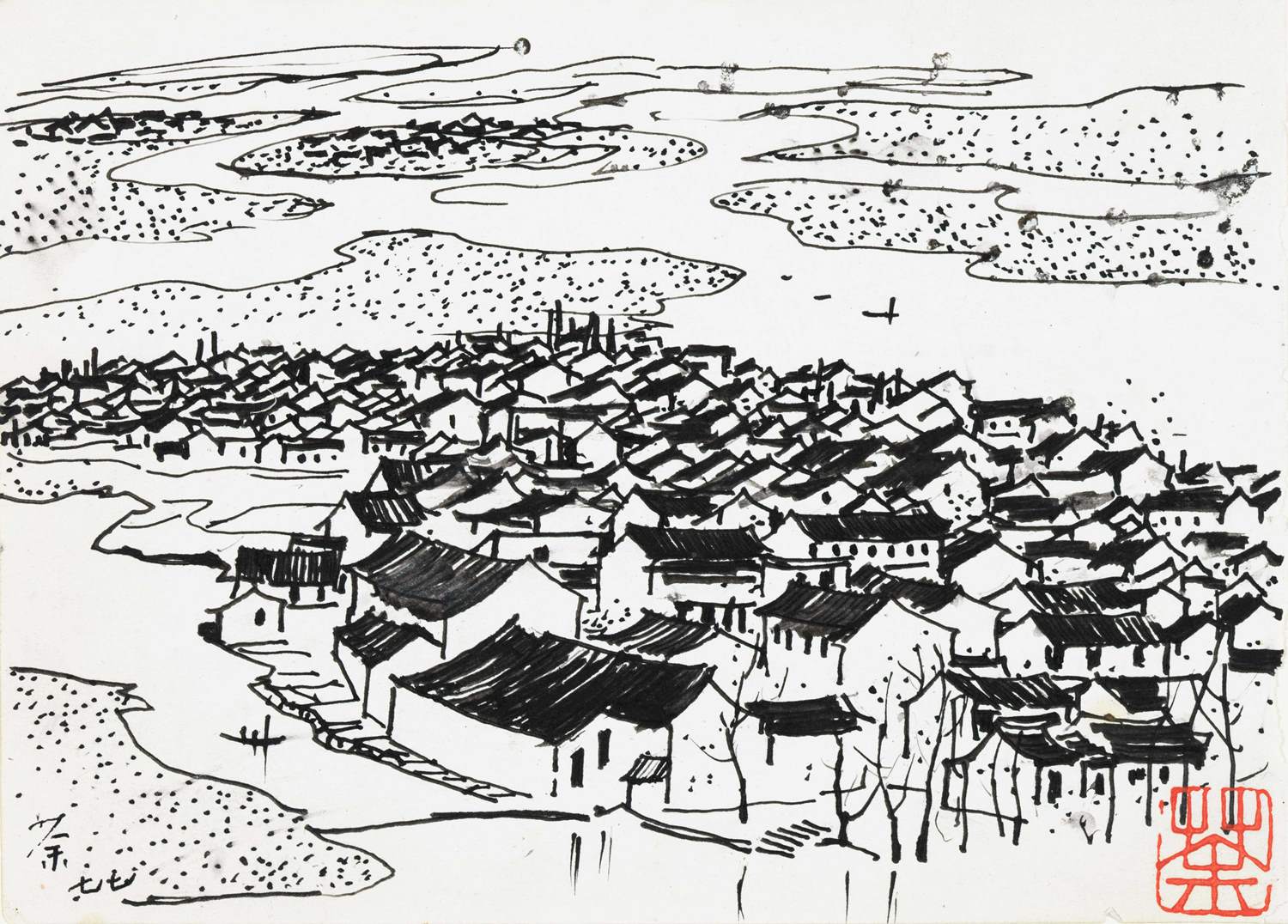
Wu returns to the white walls and waterways of Shaoxing, associated with the modern writer Lu Xun. Houses, bridges, branches, and reflections are compressed into a square network of black strokes. Red and green points pass through the image like remembered incidents rather than descriptive details.
The literary title matters because Lu Xun represented intellectual independence and modern cultural criticism. Yet Wu does not illustrate a text or reconstruct a historic street. He treats hometown as an unstable relation among place, cultural memory, and personal looking. At eighty-six, he could make the familiar newly provisional.