Modern Chinese ArtistsObject Study 01

Zao Wou-Ki / 赵无极

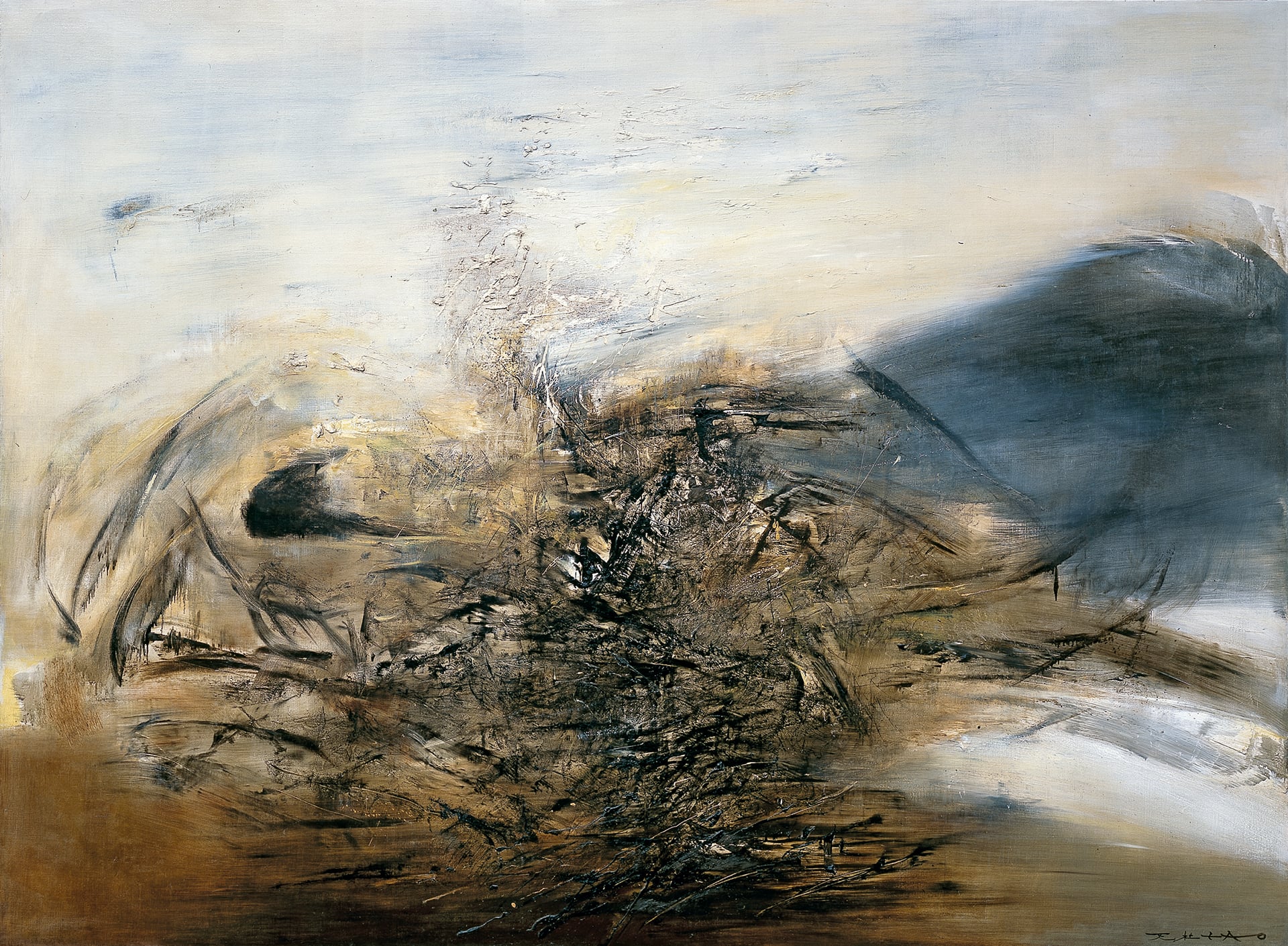
Hommage à Edgar Varèse - 25.10.64

1964

Painting listens to music

Hommage a Edgar Varese by Zao Wou-Ki, a sweeping black, ochre, white, and grey abstract composition
Artwork image courtesy Fondation Zao Wou-Ki. Educational presentation.
Hommage à Edgar Varèse - 25.10.64100%
Hommage a Edgar Varese by Zao Wou-Ki, a sweeping black, ochre, white, and grey abstract composition

Use the controls or mouse wheel to zoom. Drag the image when enlarged.

Enter the artwork study
06

Object in the Zao Wou-Ki study

Date
1964
Medium
Oil on canvas
Dimensions
255 x 345 cm
Collection / record
Musée cantonal des Beaux-Arts, Lausanne
Catalogue / accession
Fondation Zao Wou-Ki works record

01 / Why this work matters

Painting listens to music

Zao met the composer Edgar Varèse in 1954 while Varèse was working on Déserts. A decade later, this vast homage translated their shared interest in dynamic space into paint. Dense black structures collide with pale openings and long sweeps of ochre.

The painting does not illustrate a score. Instead, it uses contrast, interval, and silence as compositional forces. Empty passages expand around concentrated bursts, creating the visual equivalent of sound that gathers, breaks, and returns.
02 / Formal analysis

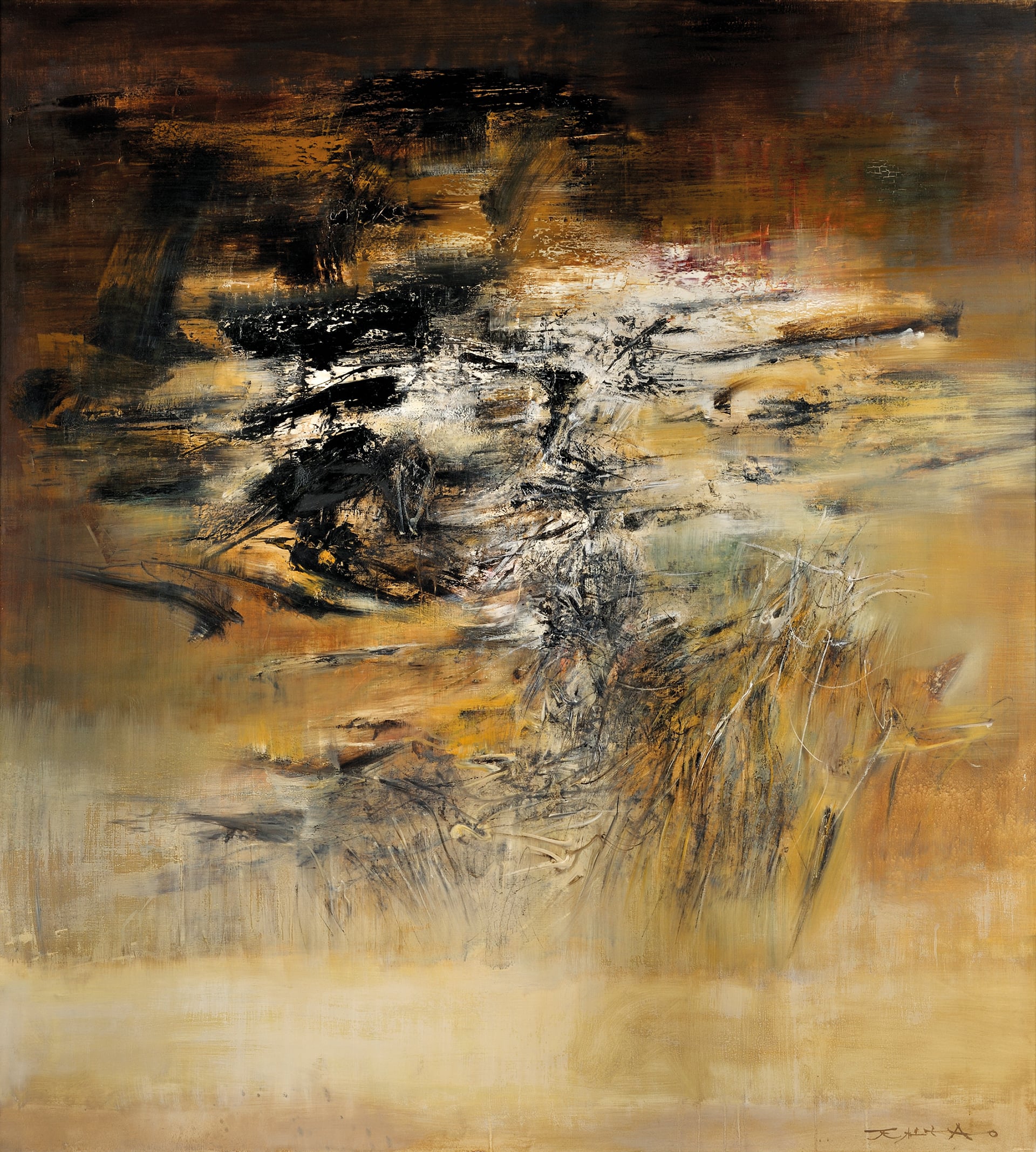
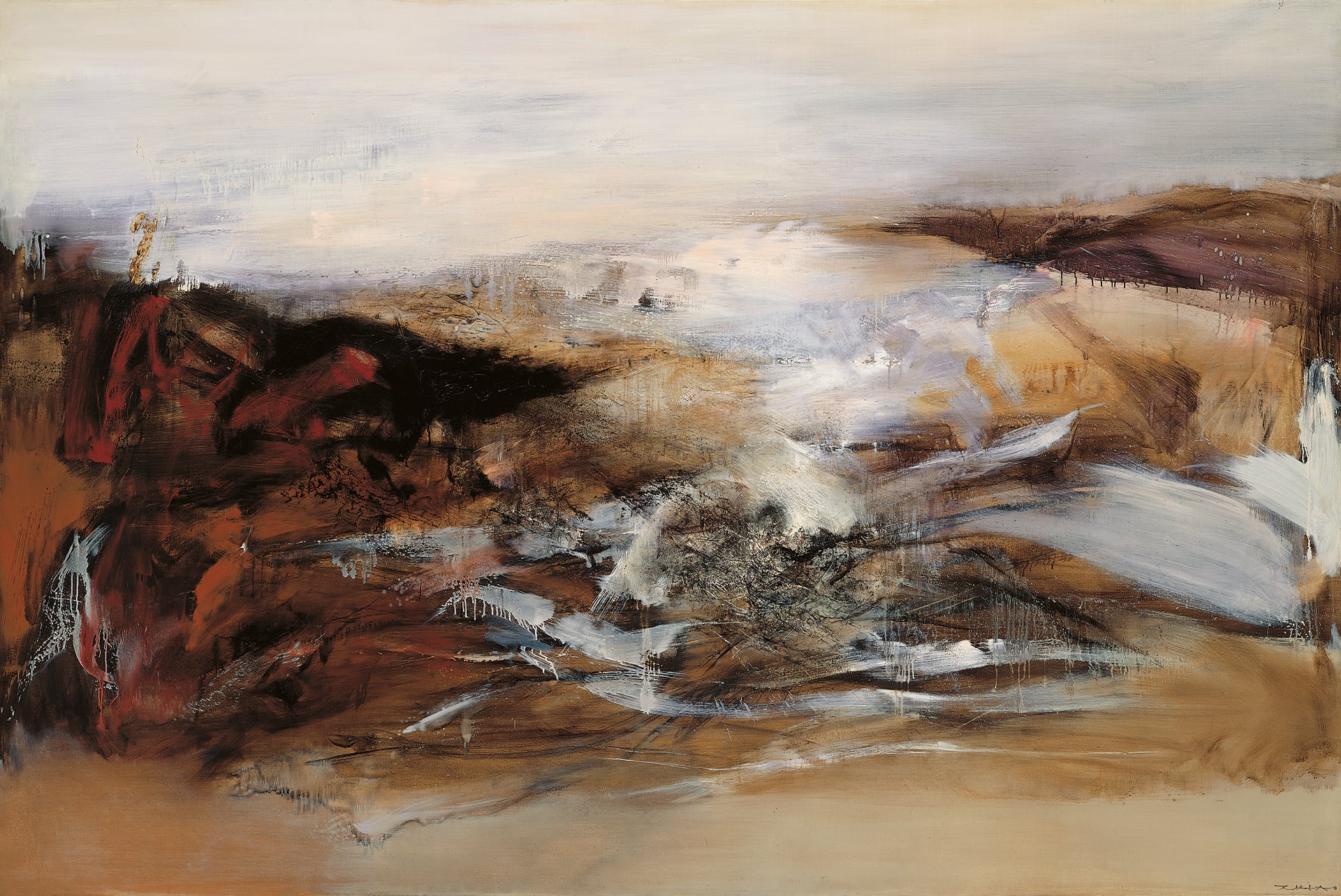
Five ways to read the visible evidence.

Move from color and composition toward the material surface and the space the work asks you to inhabit.
01

Color and light

Massed forms that behave like sound clusters

02

Composition and rhythm

Pale intervals functioning like silence

03

Line and gesture

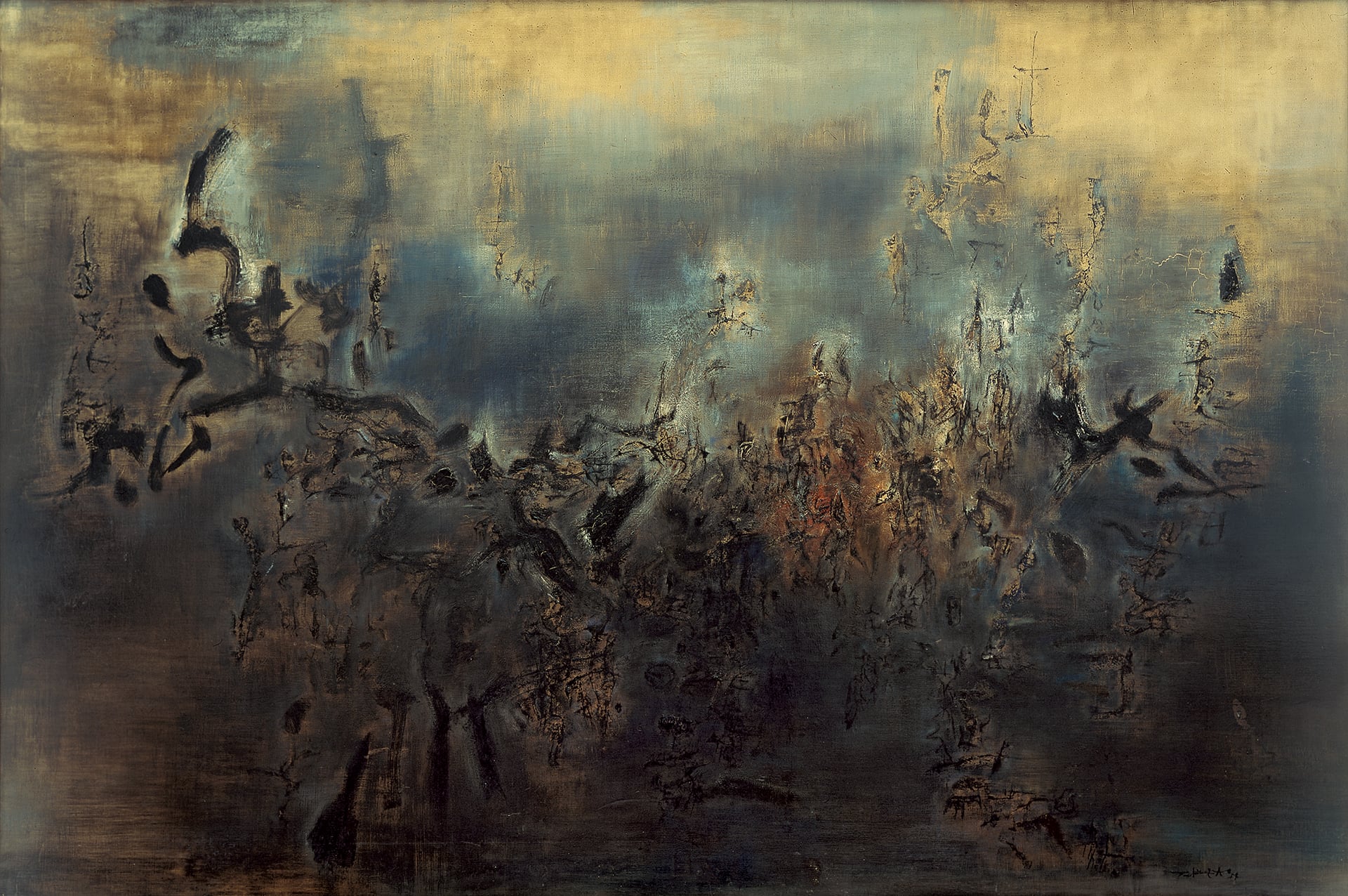
Diagonal movement that keeps the field in tension

04

Surface and material

The painting does not illustrate a score. Instead, it uses contrast, interval, and silence as compositional forces. Empty passages expand around concentrated bursts, creating the visual equivalent of sound that gathers, breaks, and returns.
05

Space and scale

Zao met the composer Edgar Varèse in 1954 while Varèse was working on Déserts. A decade later, this vast homage translated their shared interest in dynamic space into paint. Dense black structures collide with pale openings and long sweeps of ochre.

03 / History and object record

Place the image inside a life, a period, and a documented record.

Historical interpretation

Zao Wou-Ki, 1964

The painting does not illustrate a score. Instead, it uses contrast, interval, and silence as compositional forces. Empty passages expand around concentrated bursts, creating the visual equivalent of sound that gathers, breaks, and returns.

Landscape, calligraphy, memory, and postwar abstraction become an atmosphere the viewer can enter.

Exhibition and record history

What the cited record establishes

Recorded collection
Musée cantonal des Beaux-Arts, Lausanne
Catalogue reference
Fondation Zao Wou-Ki works record
Exhibition chronology
The cited public record does not provide a complete exhibition chronology. Follow the primary record for provenance, display history, and future updates.

04 / Connections

Continue through neighboring works and parallel modernisms.

05 / Sources and further reading

Follow the object back to its institutional record.