Modern Chinese ArtistsObject Study 05

Lin Fengmian / 林风眠

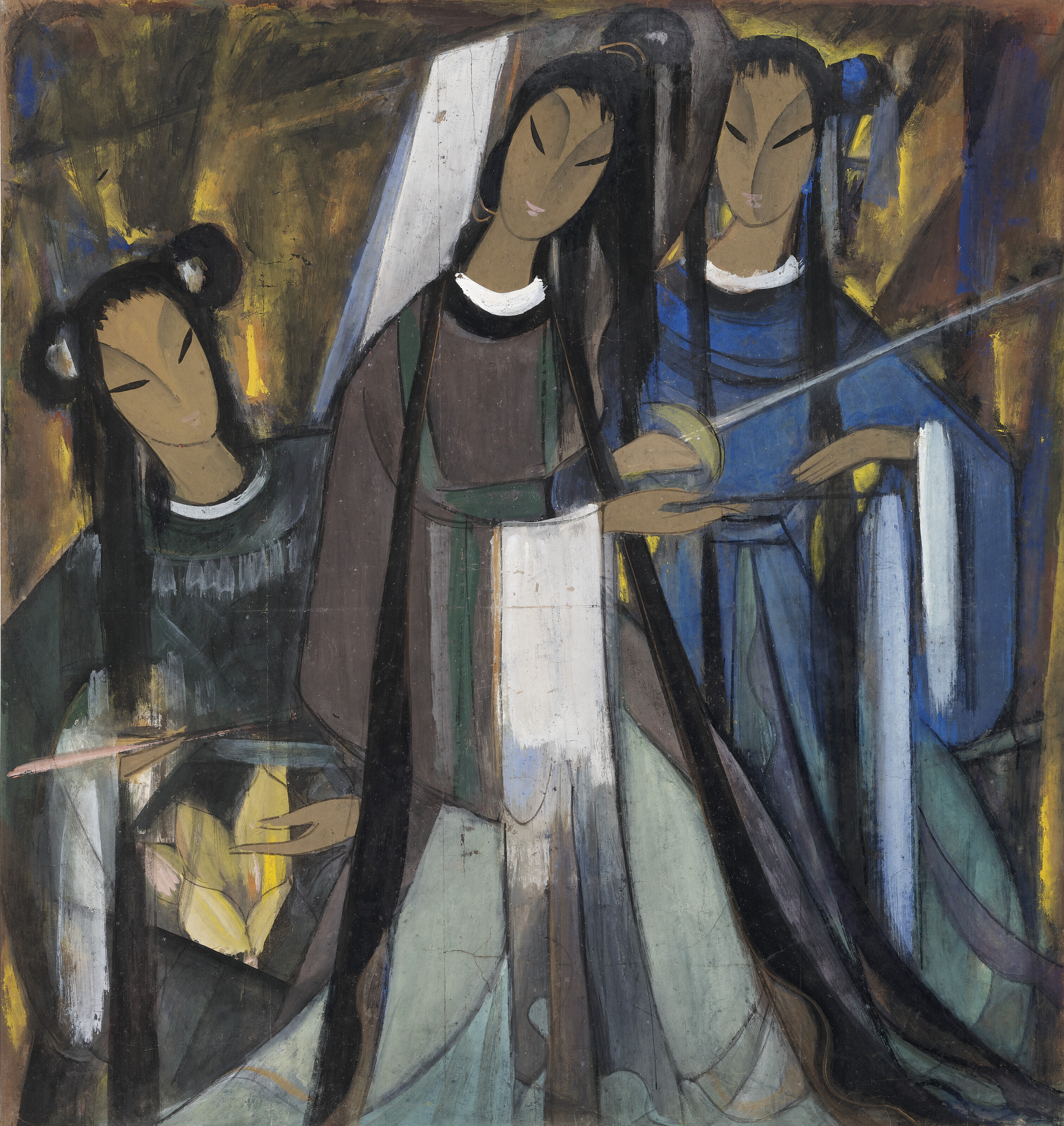
Seated Woman

early 1960s

The modern figure is built from contour, pattern, and pause

Lin Fengmian's early 1960s Seated Woman in ink and color
Image reference: The Metropolitan Museum of Art. Educational presentation.
Seated Woman100%
Lin Fengmian's early 1960s Seated Woman in ink and color

Use the controls or mouse wheel to zoom. Drag the image when enlarged.

Enter the artwork study
07

Object in the Lin Fengmian study

Date
early 1960s
Medium
Hanging scroll; ink and colour on paper
Dimensions
71.1 x 81.3 cm
Collection / record
The Metropolitan Museum of Art
Catalogue / accession
1986.267.372

01 / Why this work matters

The modern figure is built from contour, pattern, and pause

The seated woman occupies a shallow interior, her body defined by economical line and broad patterned areas rather than anatomical modelling. Lin's knowledge of Matisse is visible, yet the figure's restraint also depends on Chinese contour and the active role of untouched paper.

She is neither an academic study nor a narrative heroine. Pose, clothing, furniture, and interval create a quiet psychological field. Lin allows decorative pattern to carry structure, preventing the figure from being separated from the space she inhabits.
02 / Formal analysis

Five ways to read the visible evidence.

Move from color and composition toward the material surface and the space the work asks you to inhabit.
01

Color and light

Long contour describing the body with very few corrections

02

Composition and rhythm

Pattern working as volume rather than surface ornament

03

Line and gesture

Empty paper stabilizing the compact pose

04

Surface and material

She is neither an academic study nor a narrative heroine. Pose, clothing, furniture, and interval create a quiet psychological field. Lin allows decorative pattern to carry structure, preventing the figure from being separated from the space she inhabits.

05

Space and scale

The seated woman occupies a shallow interior, her body defined by economical line and broad patterned areas rather than anatomical modelling. Lin's knowledge of Matisse is visible, yet the figure's restraint also depends on Chinese contour and the active role of untouched paper.

03 / History and object record

Place the image inside a life, a period, and a documented record.

Historical interpretation

Lin Fengmian, early 1960s

She is neither an academic study nor a narrative heroine. Pose, clothing, furniture, and interval create a quiet psychological field. Lin allows decorative pattern to carry structure, preventing the figure from being separated from the space she inhabits.

The painter and educator who made the square sheet a meeting place for color, ink, opera, folk form, and European modernism.

Exhibition and record history

What the cited record establishes

Recorded collection
The Metropolitan Museum of Art
Catalogue reference
1986.267.372
Exhibition chronology
The cited public record does not provide a complete exhibition chronology. Follow the primary record for provenance, display history, and future updates.

04 / Connections

Continue through neighboring works and parallel modernisms.

05 / Sources and further reading

Follow the object back to its institutional record.