Modern Chinese ArtistsObject Study 05

Lin Fengmian / 林风眠

Opera Figures

20th century

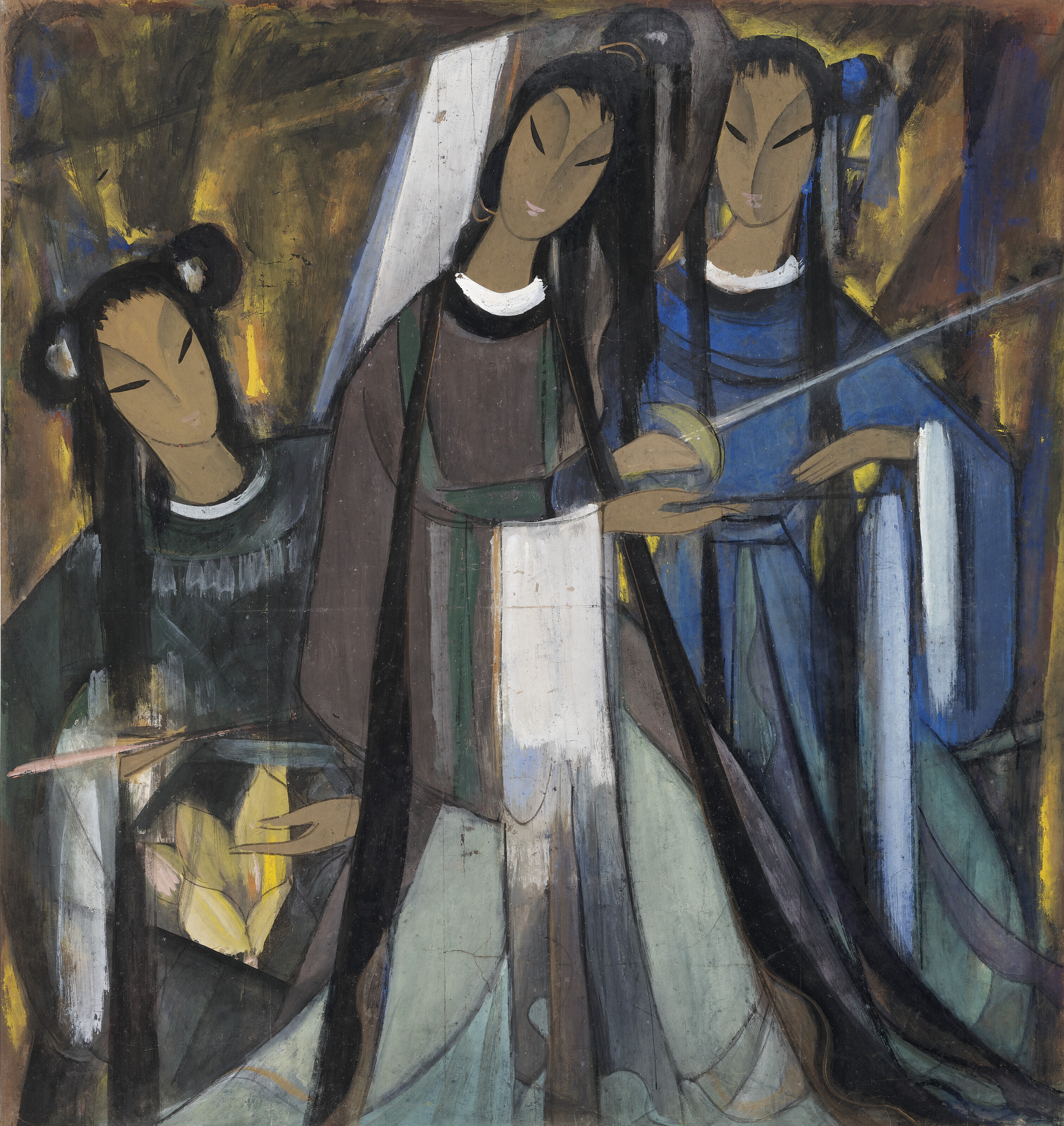
Backlight turns three performers into a layered modern tableau

Lin Fengmian's Opera Figures, an ink-and-color painting of three stylized performers and a lotus lantern
Image reference: Christie's catalogue. Educational presentation.
Opera Figures100%
Lin Fengmian's Opera Figures, an ink-and-color painting of three stylized performers and a lotus lantern

Use the controls or mouse wheel to zoom. Drag the image when enlarged.

Enter the artwork study
05

Object in the Lin Fengmian study

Date
20th century
Medium
Scroll, mounted and framed; ink and colour on paper
Dimensions
70.8 x 66.8 cm
Collection / record
Private collection; documented by Christie's
Catalogue / accession
Hong Kong 2022, lot 1095

01 / Why this work matters

Backlight turns three performers into a layered modern tableau

Three opera figures lean in opposing directions around the glow of a lotus-shaped lantern. Their masks and costumes are compressed into angular planes and sweeping lines, while warm light appears from behind them. Lin converts stage action into a layered tableau without stripping away its dramatic identity.

The opaque gouache-like color recalls the mass of Cubist oil painting, but shadow puppetry, paper cutting, opera posture, and the dim bulb in Lin's Shanghai studio are equally important. The image is modern because these visual systems are made to act together, not because one has been disguised as another.

02 / Formal analysis

Five ways to read the visible evidence.

Move from color and composition toward the material surface and the space the work asks you to inhabit.
01

Color and light

Orange-yellow light flickering behind the dark costumes

02

Composition and rhythm

Two front figures leaning right against a rear figure leaning left

03

Line and gesture

The lotus lantern anchoring an otherwise unstable stage space

04

Surface and material

The opaque gouache-like color recalls the mass of Cubist oil painting, but shadow puppetry, paper cutting, opera posture, and the dim bulb in Lin's Shanghai studio are equally important. The image is modern because these visual systems are made to act together, not because one has been disguised as another.

05

Space and scale

Three opera figures lean in opposing directions around the glow of a lotus-shaped lantern. Their masks and costumes are compressed into angular planes and sweeping lines, while warm light appears from behind them. Lin converts stage action into a layered tableau without stripping away its dramatic identity.

03 / History and object record

Place the image inside a life, a period, and a documented record.

Historical interpretation

Lin Fengmian, 20th century

The opaque gouache-like color recalls the mass of Cubist oil painting, but shadow puppetry, paper cutting, opera posture, and the dim bulb in Lin's Shanghai studio are equally important. The image is modern because these visual systems are made to act together, not because one has been disguised as another.

The painter and educator who made the square sheet a meeting place for color, ink, opera, folk form, and European modernism.

Exhibition and record history

What the cited record establishes

Recorded collection
Private collection; documented by Christie's
Catalogue reference
Hong Kong 2022, lot 1095
Exhibition chronology
The cited public record does not provide a complete exhibition chronology. Follow the primary record for provenance, display history, and future updates.

04 / Connections

Continue through neighboring works and parallel modernisms.

05 / Sources and further reading

Follow the object back to its institutional record.