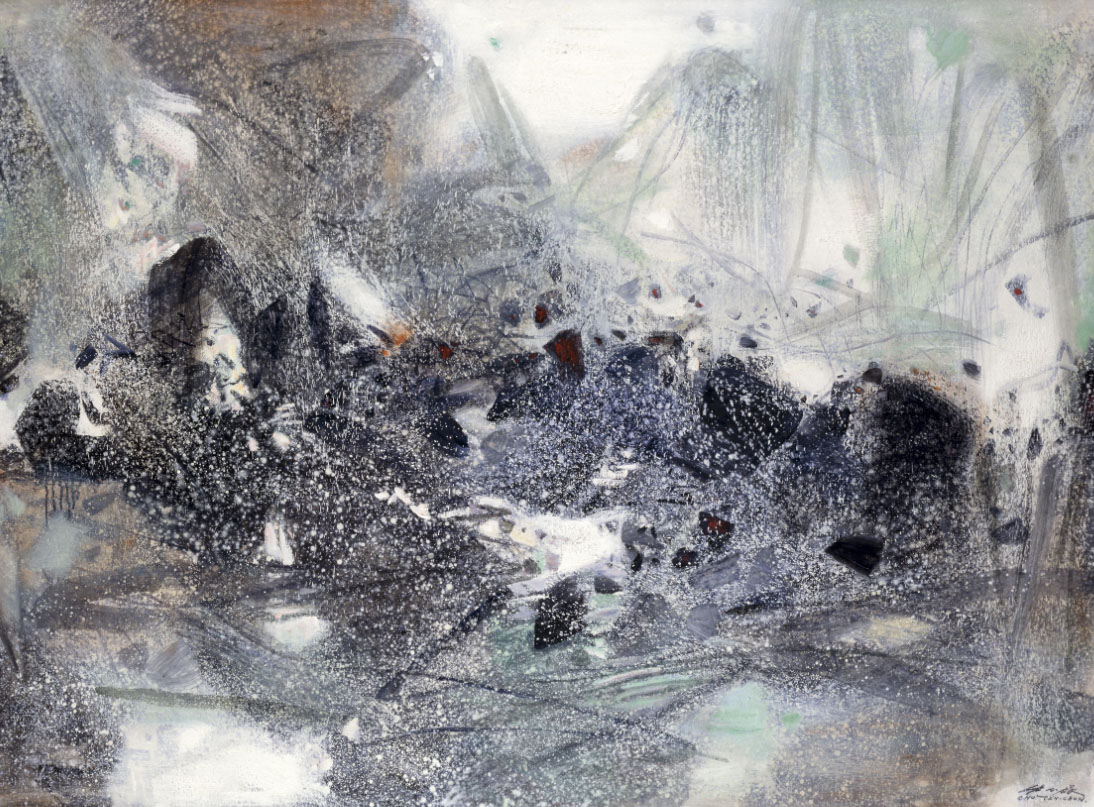
A snowstorm encountered after a Geneva exhibition in 1985 changed Chu's treatment of white. In Nature hivernale A, pale flecks and veils move across a dark, spacious field. They do not sit on top like decorative snowfall; some advance sharply while others dissolve into depth.
Winter gives Chu a way to join Chinese ideas of reserve and void to the material fullness of oil. White can be mark, air, obstruction, and light at once. The painting's weather is convincing because no single layer controls it: space forms through accumulation and partial concealment.


