Modern Chinese ArtistsObject Study 06

Pan Yuliang / 潘玉良

Seated Nude

1953

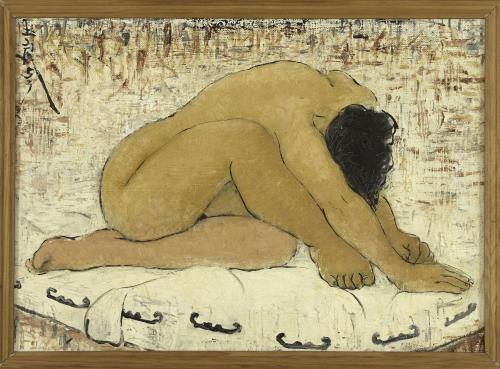
Oil gives the resting body weight without turning rest into spectacle

Pan Yuliang's 1953 Seated Nude, an oil painting of a reclining seated figure
Image reference: Paris Musees / Musee Cernuschi. Educational presentation.
Seated Nude100%
Pan Yuliang's 1953 Seated Nude, an oil painting of a reclining seated figure

Use the controls or mouse wheel to zoom. Drag the image when enlarged.

Enter the artwork study
07

Object in the Pan Yuliang study

Date
1953
Medium
Oil on canvas
Dimensions
33 x 46.4 cm
Collection / record
Musee Cernuschi, Paris
Catalogue / accession
MC8813

01 / Why this work matters

Oil gives the resting body weight without turning rest into spectacle

The seated figure folds across a small horizontal canvas, her posture relaxed rather than ceremonially posed. Pan uses oil to establish bodily weight and the pressure of limbs against support, but keeps edges and surrounding space loose.

Scale is important. This is an intimate study rather than a monumental salon nude. The viewer encounters the body at close range as a person at rest, not an allegory. Pan's long practice from the model allows anatomical confidence to coexist with emotional understatement.
02 / Formal analysis

Five ways to read the visible evidence.

Move from color and composition toward the material surface and the space the work asks you to inhabit.
01

Color and light

Edges softening as the body turns away from light

02

Composition and rhythm

Weight concentrated where limbs meet the support

03

Line and gesture

A horizontal format following the folded pose

04

Surface and material

Scale is important. This is an intimate study rather than a monumental salon nude. The viewer encounters the body at close range as a person at rest, not an allegory. Pan's long practice from the model allows anatomical confidence to coexist with emotional understatement.

05

Space and scale

The seated figure folds across a small horizontal canvas, her posture relaxed rather than ceremonially posed. Pan uses oil to establish bodily weight and the pressure of limbs against support, but keeps edges and surrounding space loose.

03 / History and object record

Place the image inside a life, a period, and a documented record.

Historical interpretation

Pan Yuliang, 1953

Scale is important. This is an intimate study rather than a monumental salon nude. The viewer encounters the body at close range as a person at rest, not an allegory. Pan's long practice from the model allows anatomical confidence to coexist with emotional understatement.

The painter and sculptor who claimed the modern body, the self-portrait, and Chinese line as sites of authorship across Shanghai, Rome, and Paris.

Exhibition and record history

What the cited record establishes

Recorded collection
Musee Cernuschi, Paris
Catalogue reference
MC8813
Exhibition chronology
The cited public record does not provide a complete exhibition chronology. Follow the primary record for provenance, display history, and future updates.

04 / Connections

Continue through neighboring works and parallel modernisms.

05 / Sources and further reading

Follow the object back to its institutional record.